
Natural Ways to Prevent Whitefly Infestations

Read Next
Identification
How to Identify Whiteflies
Like aphids, whiteflies use their piercing mouthparts to suck up plant juices and, in turn, produce a sticky substance known as honeydew, which, left on its own, can cause fungal diseases such as sooty mold to form on leaves.
With heavy whitefly feeding, plants quickly become extremely weak and may be unable to carry out photosynthesis. Leaves wilt and turn pale or yellow, growth is stunted, and eventually, leaves may shrivel and drop off the plant.
Honeydew is a sign that the whiteflies have been feeding for several days. You might also see ants, which are attracted to the sweet honeydew.
Where to Find Whiteflies on Plants
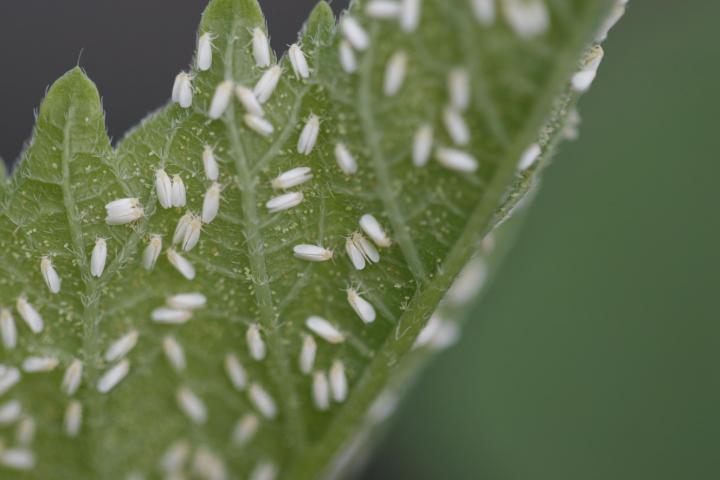
Whiteflies tend to prefer to feed on new growth, so check around any newly unfurled leaves first.
Check the undersides of leaves—especially around the veins—for white insects, even if they aren’t immediately visible, and feel leaf surfaces for sticky honeydew. If the whiteflies are feeding, they’ll suddenly all fly off the leaves in a swarm, so it’s very obvious.
You may also find eggs laid on the undersides of leaves. This is the beginning of a new generation! When the eggs hatch, the larvae look like teeny white ovals without legs; they don’t move but immediately start sucking the plant juice. This is why gardeners often miss whiteflies until it’s too late. Adult females can produce up to 400 eggs, which hatch about 1 week to 1 month after laying. They are usually laid in a circular pattern. Eggs are pale yellow when newly laid and brown when about to hatch.
Gardening Products

More Like This



Whiteflies, apparently, are active year round (depending on the climate) and there are hundreds of types—and types for specific plants—but, thankfully, only a few that bother our plants. But, of course, when those few types multiply, look out!
Nematodes are not the solution (as far as we know). There are some natural enemies, but—it seems from our research—that these are effective against specific strains of whiteflies. For example, see here: http://biocontrol.ucr.edu/bemisia.html It relates to greenhouse whiteflies/plants, but you get the idea. To that point, however, it's possible that your whiteflies can in with/on your plants.
As noted above, ladybugs and spiders might help to control the population. Other than that, we recommend insecticidal soap or try the Epsom salt solution below from Tom. See other comments below for other ideas.
- « Previous
- 1
- 2
- …
- 10
- Next »

Comments