
Growing Aloe Vera Plants: Watering, Lighting, Repotting, Use, and More!

Read Next
Planting
Before Planting Aloe Vera
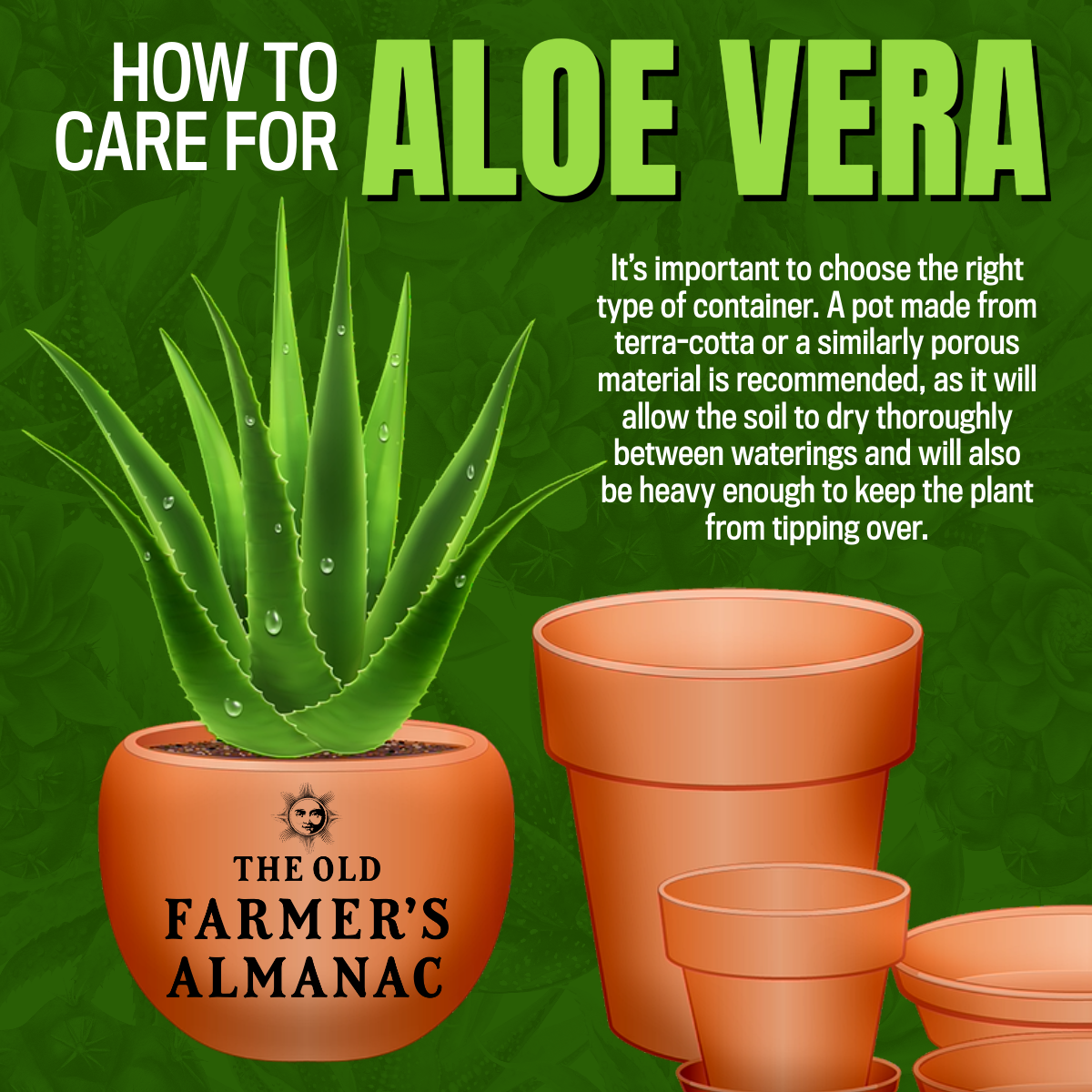
- It’s important to choose the right type of container. A pot made from terra-cotta or similar porous material is recommended, as it will allow the soil to dry thoroughly between waterings and will also be heavy enough to keep the plant from tipping over. A plastic or glazed pot may also be used, though these will hold more moisture.
- When choosing a container, pick one with at least one drainage hole in the bottom. This is key, as the hole will allow excess water to drain out. Aloe vera plants are hardy, but a lack of proper drainage can cause rot and wilting, which is easily the most common cause of death for this plant.
- Select a container that’s about as wide as it is deep. If your aloe plant has a stem, choose a container deep enough to plant the entire stem under the soil.
- Aloe vera plants are succulents, so use a well-draining potting mix, such as those made for cacti and succulents. Do not use gardening soil. A good mix should contain perlite, lava rock, chunks of bark, or all three.
- A layer of gravel, clay balls, or any other drainage material in the bottom of the pot is not necessary. This only takes up space that the roots could otherwise be using. A drainage hole is drainage enough!
- (Optional) To encourage your aloe to put out new roots after planting, dust the stem of the plant with a rooting hormone powder. Rooting hormone can be found at a local garden center or hardware store or bought online.
How to Plant (or Repot) an Aloe Vera Plant
If your aloe plant has grown leggy, has gotten too large, or simply needs an upgrade, it’s time to repot it. Here’s how:
- Prepare your pot. After giving the new pot a quick rinse (or a good scrub if it’s a pot you’ve used before) and letting it dry thoroughly, place a small piece of screen over the drainage hole; this will keep the soil from falling out the bottom and will allow water to drain properly. A doubled-up piece of paper towel or newspaper can also work in a pinch, though these will break down over time.
- Prepare your plant. Remove the aloe vera plant from its current pot and brush away any excess dirt from the roots, being careful not to damage the roots.
- If your plant has any pups, remove them now. (See “Care” below for instructions on removing and potting pups.)
- If your plant has a very long, spindly stem that won’t fit in the pot, it is possible to trim the stem off partially. Note that this is risky and could kill the plant. To trim the stem: Cut off part of the stem, leaving as much as possible on the plant. Next, place the bare plant in a warm area that gets indirect light. After several days, a callus will form over the wound. At this point, continue with the repotting instructions below.
- Plant your plant. Fill the pot about a third of the way with a well-draining potting mix, then place your plant in the soil. Continue filling in the soil around the plant, bearing in mind that you should leave at least 3/4 of an inch of space between the top of the soil and the rim of the pot. The bottom leaves of the aloe plant should rest just above the soil, too. Do not water after planting.
- Ignore your plant (temporarily). After you’ve placed your aloe in its new pot, don’t water it for at least a week. This will decrease the chance of inducing rot and give the plant time to put out new roots. Until the plant seems to be rooted and happy, please keep it in a warm place that receives bright but indirect light.

Growing
How to Care for an Aloe Vera Plant
- Lighting: Place in bright, indirect sunlight or artificial light. A western or southern window is ideal. Aloe that are kept in low light often grow leggy.
- Temperature: Aloe vera does best in temperatures between 55° and 80°F (13° and 27°C). The temperatures of most homes and apartments are ideal. From May to September, you can bring your plant outdoors without any problems, but do bring it back inside in the evening if nights are cold.
- Fertilizing: Fertilize sparingly (no more than once a month) and only in the spring and summer with a balanced houseplant formula mixed at 1/2 strength.
- Repotting: Repot when root-bound, following the instructions given in “Planting” above.
Watering Aloe Vera
Watering is the most challenging part of keeping aloe vera healthy, but it’s certainly not rocket science! The aloe is a succulent plant accustomed to arid environments, but its thick leaves still need sufficient water.
- Water aloe vera plants deeply but infrequently. In other words, the soil should feel moist after watering but should be allowed to dry out to some extent before you water again. If the soil stays overly wet, the plant’s roots can rot.
- To ensure that you’re not overwatering your plant, allow the top third of potting soil to dry out between waterings. For example, if your plant is kept in 6 inches of potting soil, allow the top 2 inches to dry out before watering again. (Use your finger to test the dryness of the soil.)
- Generally speaking, plan to water your aloe plant about every 2–3 weeks in the spring and summer and even more sparingly during the fall and winter. One rule to remember for fall and winter watering is to roughly double the time between waterings (compared to your summer watering schedule). In other words, if you water every 2 weeks in summer, water every 4 weeks in winter.
- When watering, some excess water may run out of the bottom of the pot. Let the pot sit in this water so the soil absorbs as much as possible. Wait 10–15 minutes, then dump any remaining water.

Removing and Replanting Aloe Vera Offsets (Pups)
Mature aloe vera plants often produce offsets— plantlets, pups, or babies—that can be removed to produce an entirely new plant (a clone of the mother plant, technically).
- Find where the offsets are attached to the mother plant and separate them using pruning shears, scissors, or a sharp knife. Leave at least an inch of stem on the offset.
- Allow the offsets to sit out of the soil for several days; this lets the offset form a callus over the cut, which helps to protect it from rot. Keep the offsets in a warm location with indirect light during this time.
- Once the offsets have formed calluses, pot them in a standard succulent potting mix. The soil should be well-draining.
- Put the newly potted pups in a sunny location. Wait at least a week to water and keep the soil on the dry side.
How to Get Your Aloe Vera to Flower
Mature aloe vera plants occasionally produce a tall flower spike—called an inflorescence—from which dozens of tubular yellow or red blossoms appear. This certainly adds another level of interest to the already lovely aloe!
Unfortunately, a bloom is rarely achievable with aloes that are kept as houseplants since the plant requires nearly ideal conditions to produce flowers: lots of light, sufficient water, and the right temperature range. Due to these requirements (mainly lighting), aloe flowers are usually only seen on plants grown outdoors year-round in warm climates.
To give your aloe the best shot at flowering:
- Provide it with as much light as possible, especially during spring and summer. Aloes can be kept outdoors in full sun during the summer when temperatures are above 70°F (21°C). Bring the aloe inside if nighttime temps threaten to drop below 60°F (16°C).
- Note: Don’t move your aloe from indoors to full sun right away; it needs time to adjust to the intense light, or it may cause sunburn. Allow it to sit in partial shade for about a week before moving it to a brighter location.
- Ensure the plant is getting the right amount of water—enough to keep it from drying out completely but not enough to drown it! If the plant’s being kept outdoors, make sure that it’s not getting consistently soaked by summer rains.
- Give your aloe a proper dormancy period in the fall and winter. Aloe tends to bloom in late winter or early spring, so giving them a period of rest consisting of less frequent watering and cooler temperatures may encourage them to flower.
- Don’t be surprised if it still doesn’t flower. Despite our best efforts, indoor conditions just aren’t ideal for most aloes, so don’t be surprised if yours simply refuses to bloom!
Types
Especially attractive Aloe include:
- Aloe variegata Tiger or Partridge-Breasted Aloe – A compact aloe characterized by short, smooth leaves with uneven white stripes.
- A. aristata Lace Aloe – A small plant with white-spotted, finely sawtoothed leaves.
- A. glauca Blue Aloe – A larger aloe species with silver-blue leaves.
Harvesting
Aloe Vera Gel
To make use of the aloe vera plant’s soothing properties, remove a mature leaf from the plant and cut it lengthwise. Squeeze the gel out of the leaf and apply it to your burn, or lay the opened leaf, gel side down, on the affected area. Learn more about aloe vera’s healing properties.
Do not ingest the gel, as it can cause nausea and other unpleasant symptoms.

Gardening Products

More Like This



The pot does not need to be very deep. Aloe vera has shallow roots. Use a pot that is about 2 inches wider than the root ball.

Comments