
Plant, grow, and harvest lavender in your garden, plus tips on edible varieties, propagation, and creative ways to use this aromatic herb.

Read Next
Growing
How to Care for Lavender
- Water once or twice a week after planting until plants are established. Water mature plants every 2 to 3 weeks until buds form, then once or twice weekly until harvest. (Yellowing leaves are often a sign of overwatering.)
- In colder growing areas, plants may need extra winter protection. Cover the plants with a winter mulch of evergreen boughs or straw, insulating them from freezing winds and temperatures. Read more about winter care of lavender plants.
- Another option for cold areas is to grow lavender in a pot, keeping it outdoors in the summer and indoors in winter. While indoors, place the pot in a south-facing window with as much light as possible—water sparingly, as the plant will be dormant at this time.

Pruning Lavender
In cooler climates: Prune established plants in spring when green leaves start to emerge from the base. Remove about one-third of the top to keep the plant from becoming leggy and bare at the base, but do not cut back into old wood, as it will not regrow.
In warm climates: All pruning can be carried out in autumn.
The flowering stems can be harvested while in bloom or snipped off after the flowers fade to keep the plant tidy.
Types
- English lavender (Lavandula angustifolia), the most common, is hardy to USDA Zone 5. It’s edible and often blooms twice a season. Hundreds of varieties exist in many colors (white, pink, blue-violet, and purple) and sizes.
- ‘Hidcote’: deep purple flowers; silver-gray foliage; compact form
- ‘Munstead’: violet-blue flowers; dark green foliage; compact form
- ‘Miss Katherine’: deep pink flowers; aromatic foliage; mounding form
- Lavandins (L. x intermedia)—a hybrid of English and Portuguese lavender (L. latifolia)—are generally larger plants that bloom only once yearly, later in the summer.
- ‘Phenomenal’: vigorous variety highly tolerant of heat and humidity; resistant to common root and foliar diseases; long flower spikes
- ‘Provence’: vigorous, long-stemmed variety; very fragrant
- Spanish lavender (L. stoechas) and French (fringed) lavender (L. dentata) are typically only winter-hardy in Zones 7 to 9.
Harvesting
How to Grow New Lavender from Cuttings
- Cut following the plant’s bloom. Choose side shoots for cuttings that have no buds.
- Cut very low near the root, getting several inches of stem. Gently scrape the skin off the bottom portion of the stem on one side with a knife. Remove foliage on the bottom 2 inches of the stem.
- Fill a small pot (4 inches or so) with potting mix. Optional: Dip each cutting in the rooting hormone first.
- Insert bare stem into potting soil. Firm the soil and water in. Cover the whole pot with clear plastic or a polythene bag to create humidity. Place pots in a warm, shaded area.
- Allow about 3 weeks for roots to appear. (If you tug gently, the root shouldn’t move.) Then, remove the bag.
- Water when soil is dry an inch down; feed with 1/4-strength liquid plant fertilizer once a week.
- After a few weeks, transplant it into a larger pot.
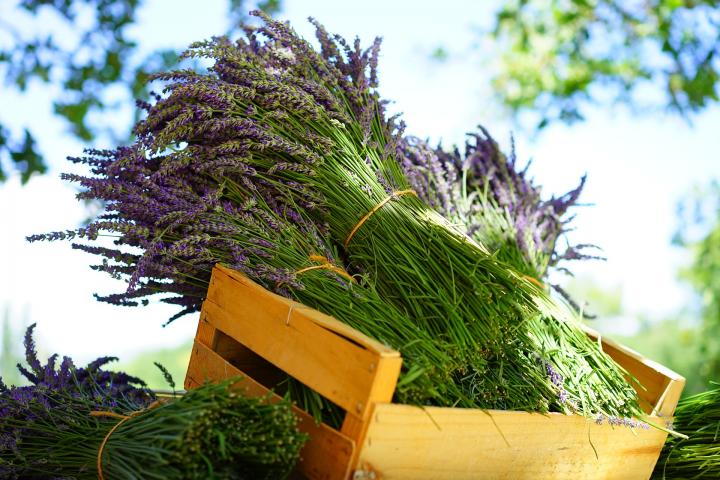
Harvesting Lavender Flowers
Lavender is a wonderful herb for drying. Here’s how to harvest it:
- Harvest in the morning hours when the oils are the most concentrated.
- Snip off stems when about half of the flower buds have opened, cutting the stems as long as possible.
- Gather them into bundles and secure them with rubber bands.
- Dry the bundles of lavender by hanging them in a sheltered, cool, dark place with good air circulation.
- After a few weeks, the flowers will have dried fully and can be shaken gently from the stems into a lidded jar. Store the flowers in a cool, dark place.
Use your dried lavender to make lavender sachets—a lovely gift. Lavender sachets can help to keep your sheets or towels smelling sweet, repel moths and insects, and even promote a restful night’s sleep.
Storing Lavender
Store lavender flowers in a lidded jar somewhere cool and dark, or pop them straight into a sachet to keep towels, sheets, or clothes smelling sweet and to repel moths. If you suffer from insomnia, try inserting the sachets into a pillow so the calming scent can help you drift off to a restful slumber.
Gardening Products
Cooking Notes
Although edible, lavender should be used sparingly in recipes. The herb has a lovely perfumed flavor, but it can be too strong or bitter if overused.
The herb is often used in herbes de Provence mixes, and leaves can be chopped and added sparingly to some sauces, shortbread biscuits and baked goods, ice cream, teas, and lemonade.
See our recipe for lavender scones and honey-lavender syrup, as well as a recipe for making your own lavender-herb tea.

More Like This


Comments

Generally, it's not recommended to cut lavender's woody stems back too much, as it can cause damage. However, there's always a chance your plants may recover. We would suggest waiting to see if there are any signs of life in the next month or so, being sure to not let the plant dry out too much nor get overwatered. If nothing appears after that length of time, then they are likely dead, unfortunately.
We're not sure where you live in Alaska, however, lavender is a plant that naturally loves hot, sunny, dry climates and usually grows in zones 5 to 9 so first check the zone.
If you do grow lavender, make sure that you keep it dry. For example, piles of wet leaves from winter will hold in moisture which causes die back.
English lavenders (such as the 'SuperBlue' variety) are generally winter hardy up to Zone 5—but that's not to say that they can't survive in colder areas if provided adequate protection. Since you cannot bury the pots, could you move them to a sheltered location such as a garden shed or garage? You'll need to keep them insulated from the cold, since the roots won't get the natural protection of the ground soil. Mulch over top of the plants with 3 to 4 inches of straw. Give them some water before you mulch and store them. You'll want to make sure that they don't dry out completely, but also that they don't get too wet throughout the winter.
Even with all this, they may not survive the cold... Perhaps you could repot them in smaller pots and bring them inside instead?
- « Previous
- 1
- 2
- …
- 10
- Next »

Hi Maichen,
Lavender does best in full sun, but can be tolerant to some shade. Other plants with nice flowers that do well in shade include bleeding hearts, foxglove, and and lily of the valley.