
Caption
This rocky front entry has little to no grass, using various groundcover plants instead.
Low-Maintenance Ground Covers

A baffling problem for many gardeners is what to grow in areas that are challenging. Have a tough slope or area that is hard to mow safely? Want to fill in around taller plants with a living mulch or grow a “stepable carpet” around your walkway pavers? Here are 10 low-maintenance ground cover plants that add curb appeal!
What Are Ground Covers?
Groundcovers are essentially low-growing perennial plants that never reach more than a couple of inches in height. Most of these plants spread easily. There are many reasons that ground covers are planted. They’re great for:
- areas where grass just doesn’t grow well, especially in shady areas such as under a tree.
- covering slopes or steep hillsides where it’s hard to mow but also where plants can help with erosion.
- hot, dry areas which receive little irrigation (think sedum!).
- areas that border patios, driveways, and lawns as well as between patio stones and stepping pavers
- high-traffic areas that need something tougher than grass.
And don’t just think of ground covers as cover-ups! They can provide flowering color and interest to your landscape. They can be beneficial to pollinators, stabilize soil, and grow where other plants won’t grow, such as under a tree.
It’s important to choose the right ground cover for your needs, plant ground cover correctly, and also make sure that you pick a ground cover that can’t get quickly out of control.
10 Low-Maintenance Ground Covers
1. Bearberry
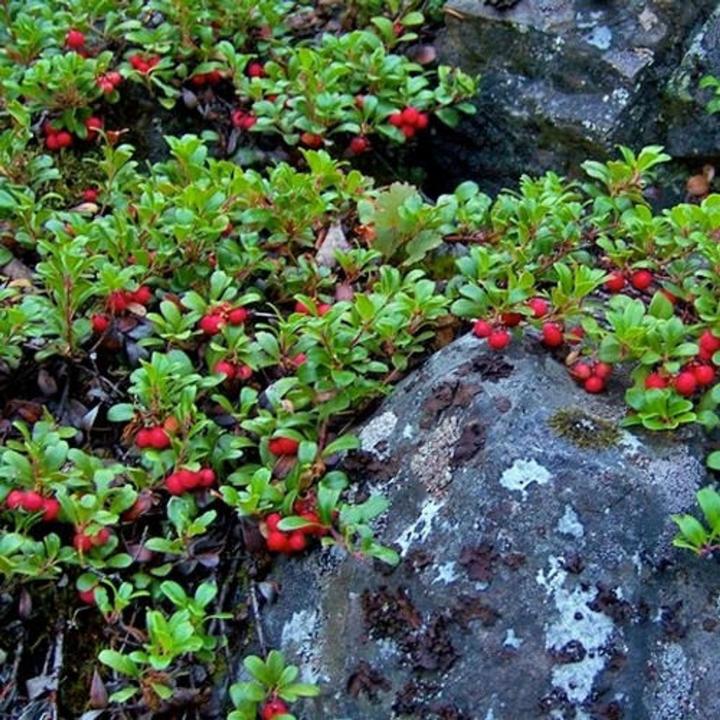
Bearberry (Arctostaphylos uva-ursi) is extremely tolerant of poor soil. It will even will grow in pure sand and will grow in sun or shade. The 6-inch-tall evergreen has glossy small dark-green leaves that turn bronze-ish-red in autumn.
In spring, the entire plant is covered with tiny white flowers tinged with pink. These mature to bright red berries that birds love. Spaced 12 inches apart, plants will form a thick carpet in 2 or 3 seasons. Bearberry is hardy to Zone 2.
2. Hen-and-Chicks
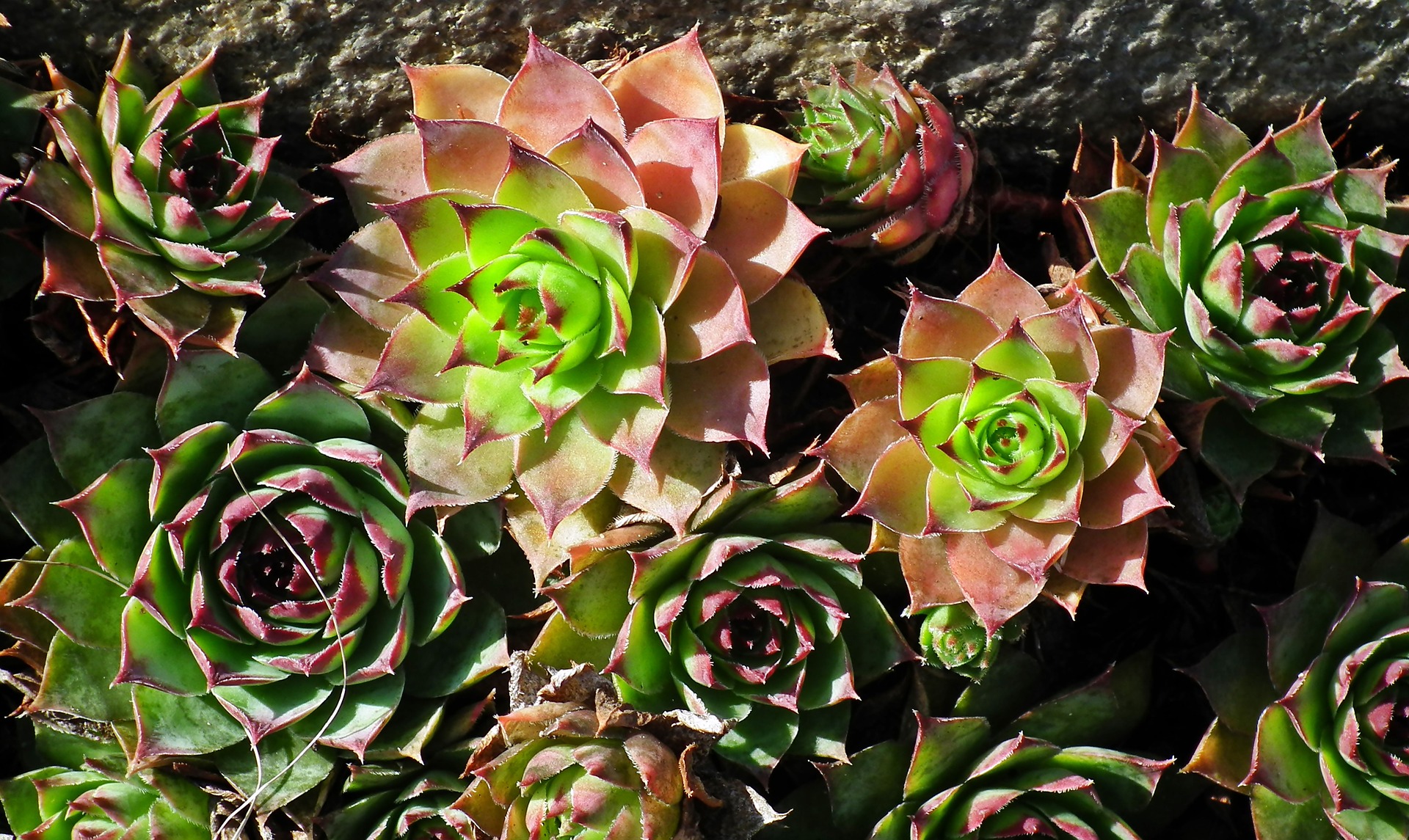
Hens-and-chicks (Sempervivum) are great tucked between pavers and stones that line your pathways, but you probably don’t want to walk on them, especially barefoot! They thrive in hot dry places where nothing else will grow and make a fine living mulch for a xeriscape garden. Zones 3–8.
3. Sedums
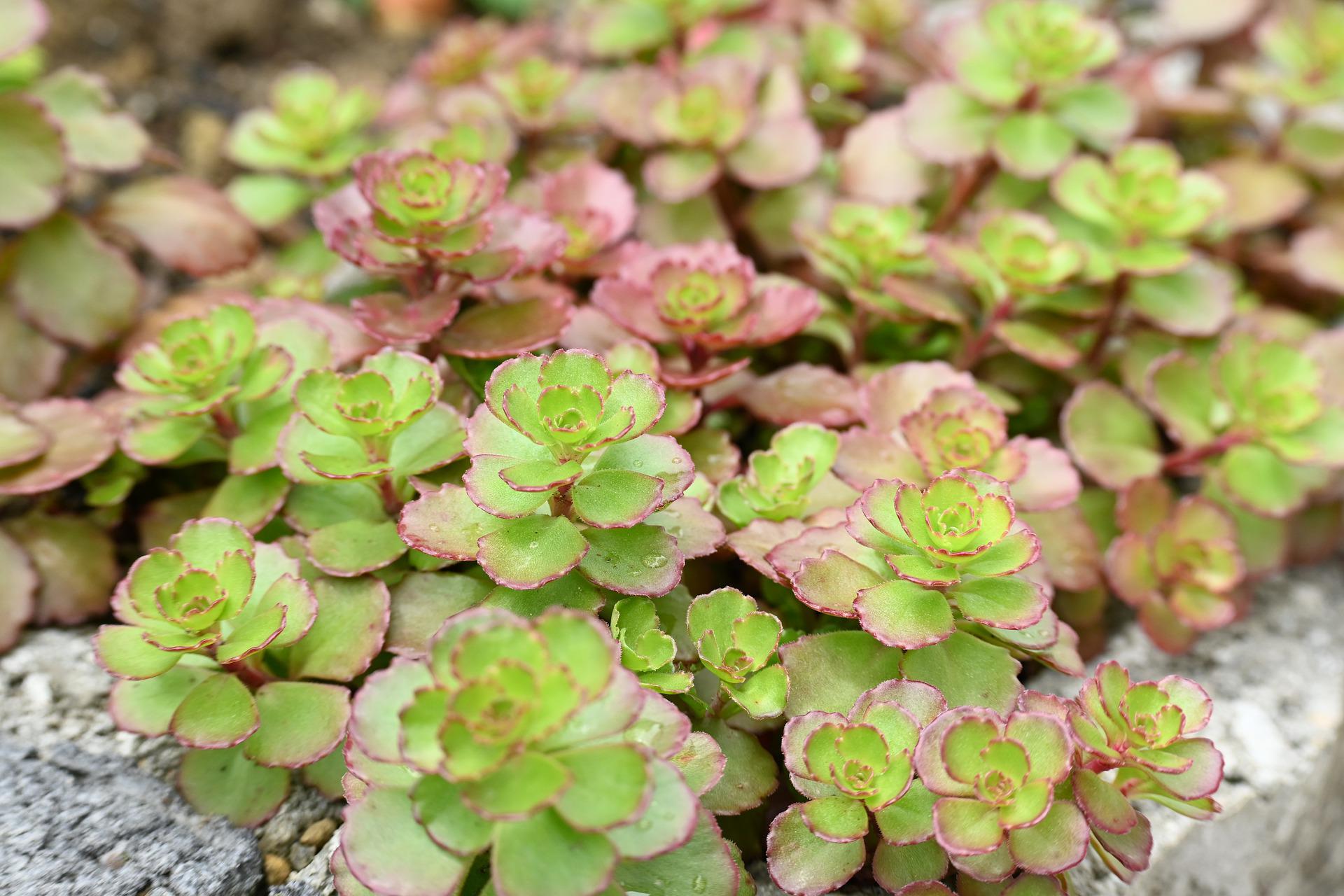
Sedum comes in many shapes and sizes, but the low-growing ones are perfect ground covers for those hot dry slopes where nothing else grows. These spreading, mat-forming types of sedums resist drought by storing water in their fleshy stems and roots.
Practically bullet-proof, they are able to withstand any amount of abuse you throw at them, and their blossoms will attract a multitude of bees and other beneficials. Zones 3–10. Two good choices, both hardy to Zone 4, are 2-inch-tall ‘John Creech’ two-row sedum (Sedum spurium cv.), with pink flowers in June, and the 6-inch-tall ‘Fuldaglut’ two-row sedum, with reddish or purple foliage and rose-red flowers from July through September.
See our guide on growing sedum.
4. Creeping Phlox
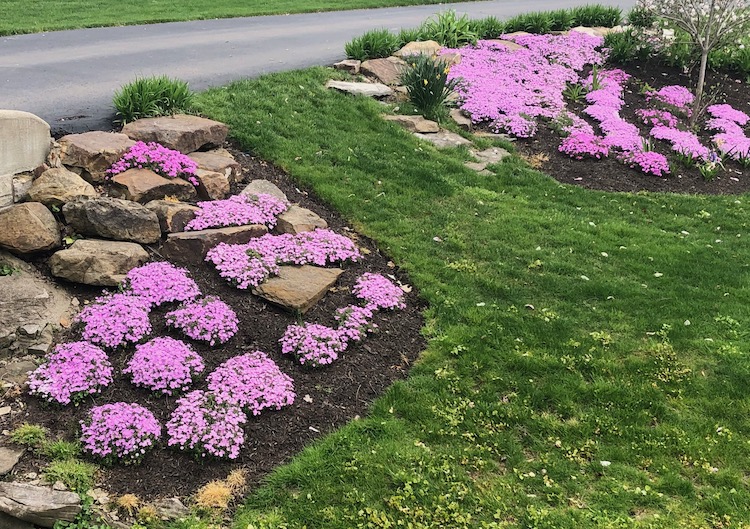
Creeping phlox (Phlox stolonifera) works well in hot spots or sandy spots with full sun and maintains thick foliage all year round, as well as pretty blooms in the early spring. In full sun, phlox provides a thick mass of carpet-like foliage that is completely covered with an abundance of blooms. See our guide on growing phlox.
5. Foamflower
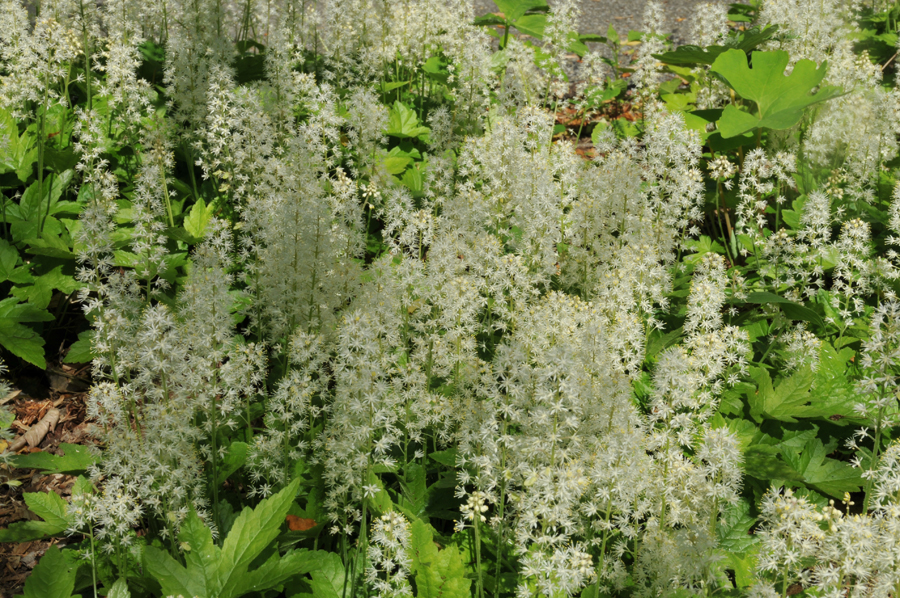
One of the best native plants to use as a shade ground cover, Foamflower (Tiarella cordifolia) has 8- to 10-inch spikes of fluffy white flowers in spring and evergreen foliage that adds visual texture to a woodland path and an added layer of interest between taller plants in your shade garden. Tolerant of a wide range of growing conditions from dry to moist but well-draining soils, this undemanding plant performs reliably in the garden. Zones 3–9.
6. Creeping Thyme
Creeping Thyme (Thymus serpyllum) is a sun-loving perennial herb with small lavender flowers that bloom in the summer and an evergreen mat of low-growing foliage.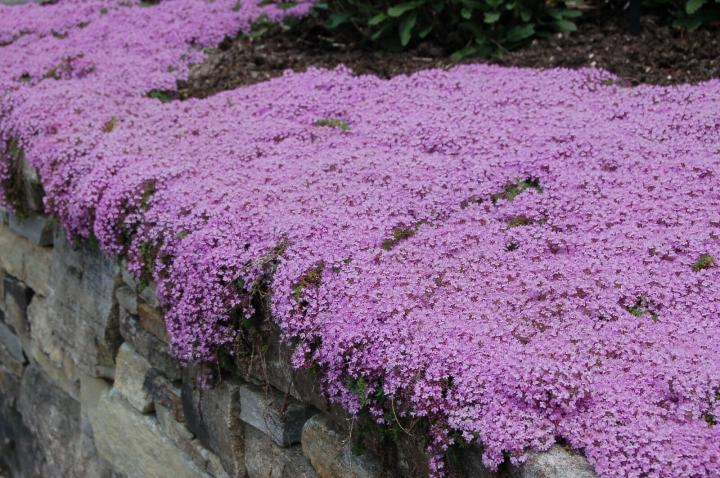
7. Blue Fescue Grasses
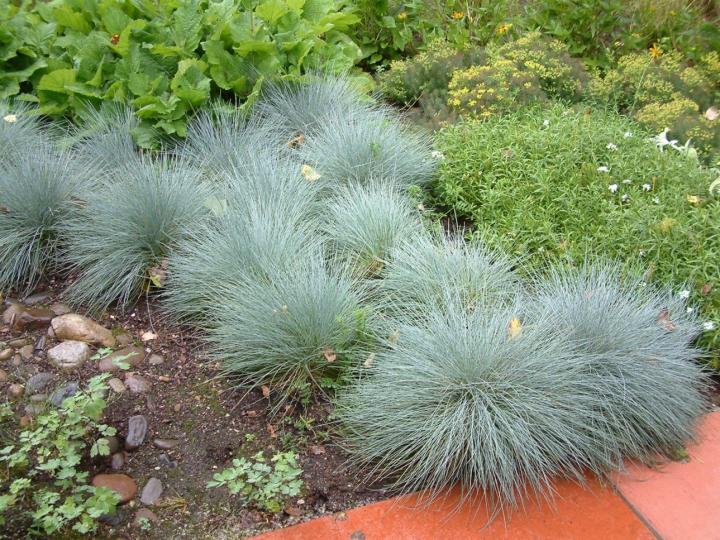
Ornamental grasses such as blue fescue (Festuca glauca) work well in dry, hot spots and also add beautiful texture to the landscape.
8. Creeping Junipers
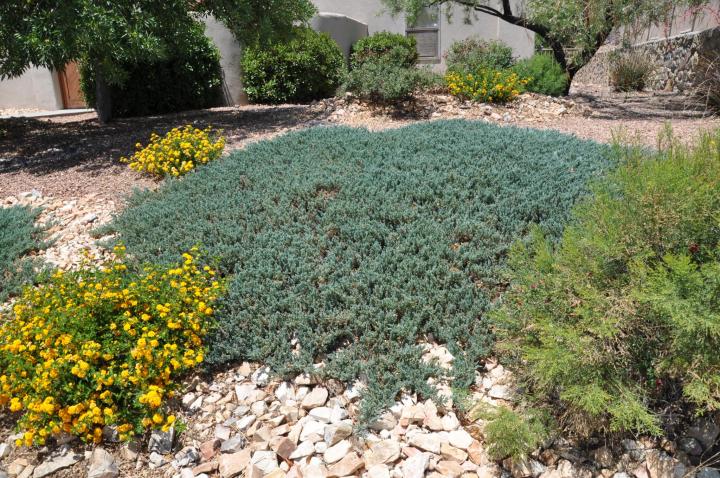
This ground cover is suitable for parched areas. A popular choice is blue rug juniper (Juniperus horizontalis ‘Wiltonii’), a tough-as-nails ground hugger that is only 4 to 6 inches tall. Its intense silver-blue needles take on pleasing purple tones in winter. Although a single plant may eventually grow to 8 feet in diameter, the recommended spacing is 2 to 3 feet for quick coverage. Blue rug juniper is hardy to Zone 3.
9. Sweet Woodruff
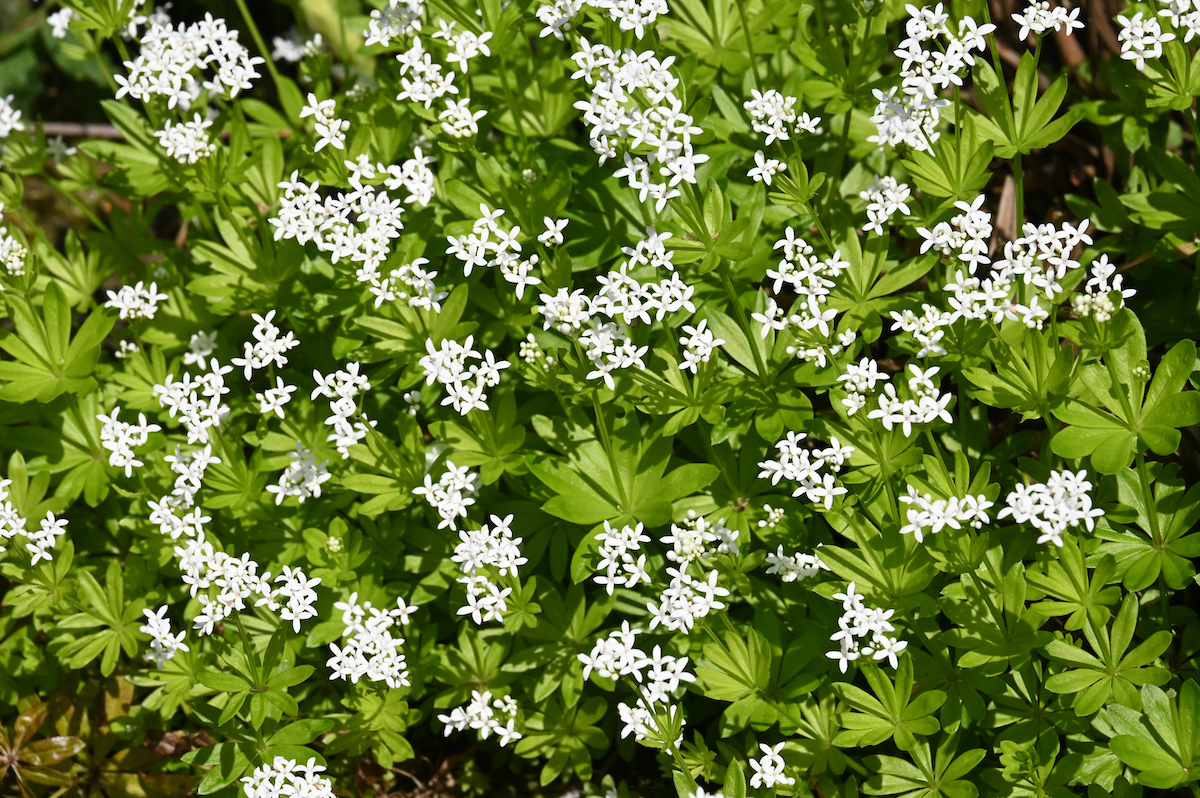
With bright green fragrant leaves, sweet woodruff (Galium odorata) bears clusters of white flowers in spring. It is an excellent low-growing ground cover for shady spots and under trees, and stays green until the snow hits. And that sprinkling of tiny white flowers is just sublime. Mine grow under a forsythia outside my living room window, where I can keep an eye out for their early blossoms. Zones 3–9.
10. Lamium (Deadnettle)
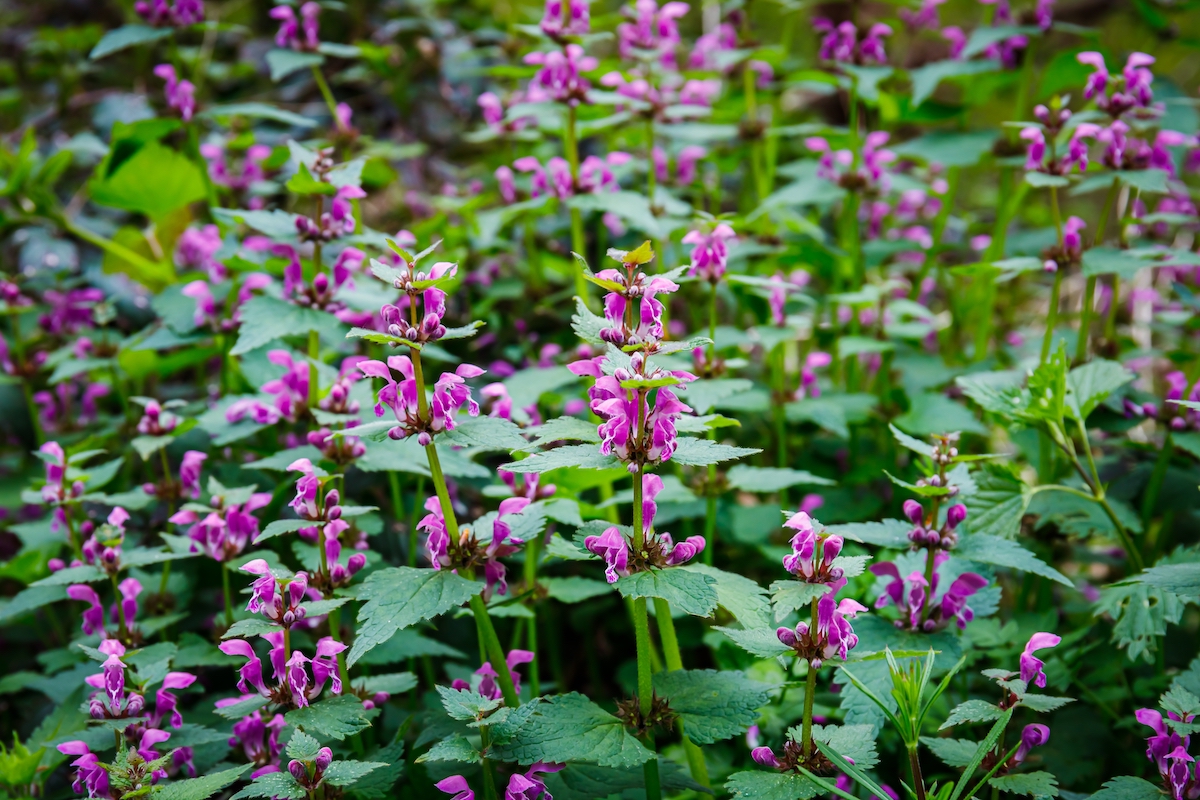
Wonderful as ground cover in a shady area, Spotted deadnettle (Lamium maculatum) can cover large areas quickly, prevailing in the most unforgiving of conditions. It’s deer-resistant and can tolerate drought, heat, and cold. This low-maintenance plant thrives year-round! Pink or white flowers bloom in spring and summer.
Planting Ground Cover
Remember that coverage isn’t instantaneous. You don’t want to squeeze ground cover plants together; most grow and cover their soil surface by year three. Pay special attention to the spacing on the plant tags; this will help you calculate how many plants you need. As a general rule, you want to space plants so that the distance between each one is generally equal to their maximum width. Here is a good guideline to gauge how many plants you need from the National Gardening Association:
- 100 plants spaced 6 inches apart cover about 20 square feet
- 12 inches apart, they’ll cover 85 square feet; and
- 18 inches apart, they’ll cover 200 square feet
Before you plant most ground cover plants, ensure that all weeds and grass have been eliminated. There are a number of ways to remove weeds (hoes and tillers) or, if you have time, you can wet the area and cover it with clear plastic for 4 to 6 weeks to solarize the soil.
Scatter composted manure over the planting site and even the planting surface. Then place your plants on top of the soil in zigzag rows. When ready to plant, dig holes to the same depth as, and two to three times wider than the plants’ root balls. Remember to place the plant in the hole so that it’s at the same soil level as it was in the pot. Firm the soil and water in. Cover in organic mulch about 2 inches thick, but about 6 inches away from the plant stems.
We hope this helps! If you’re having trouble growing grass or other plants in your yard, have you discovered clover? Gardeners are returning to recognizing the benefits of clover in lawn grass mixtures—or even as a replacement for grass. Learn more about the clover comeback.
If you are interested in replacing your lawn or part of your lawn, discover ground covers which are grass alternatives!

More Like This




Comments