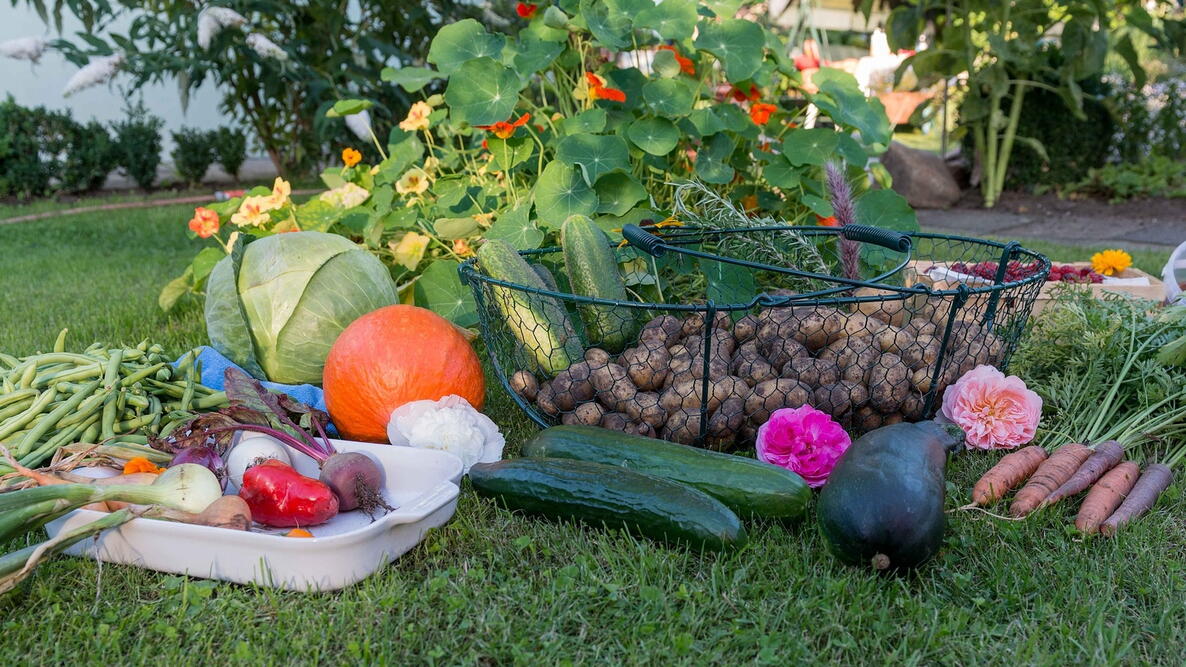

If you garden to feed your family, planning which vegetables to grow for a well-stocked pantry ensures you’ll have enough fresh and stored produce to last through winter. From potatoes and sweet potatoes to kale and winter squash, these tips help maximize your harvest and preserve it for the months ahead.
Why Grow Your Own Vegetables
Though we are far from self-sufficient, this year we had enough homegrown potatoes and sweet potatoes to last through March. I am working on using up the last of the applesauce, onions, and winter squash. The garlic is long gone, but we still have plenty of garlic scape pesto in the freezer.
The value of your own organically grown produce can’t be overstated. I suffer from serious sticker shock when I have to start buying vegetables at the grocery store, especially the organic stuff. Flavor and nutrition are lost in shipping, and there is always the risk of E.coli, listeria, or some other nasty contaminant.
If you’re a beginner, also see our article on starting a small vegetable garden.
Best Vegetables to Grow for Your Pantry
If a well-stocked pantry is your goal, don’t forget to grow some of these old reliables:
Kale and Leafy Greens
- Kale: ‘Red Russian’ and ‘Nero di Toscana’ are prolific growers and freeze well. ‘Red Russian’ plants have wintered over in our garden, giving us early, tender baby leaves at a time of year when there isn’t much else growing. Gardeners from long ago used to refer to this time of year—when the winter-stored food was gone and the garden had not started to produce anything edible—as the hungry season or the starving time.
Onions and Garlic
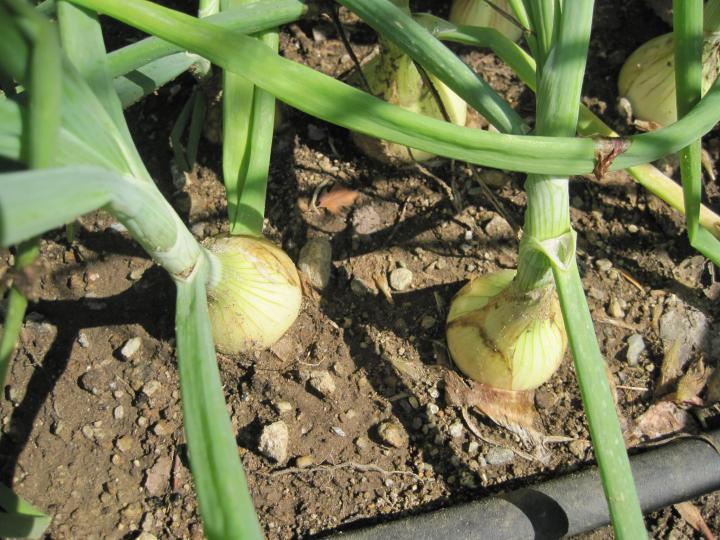
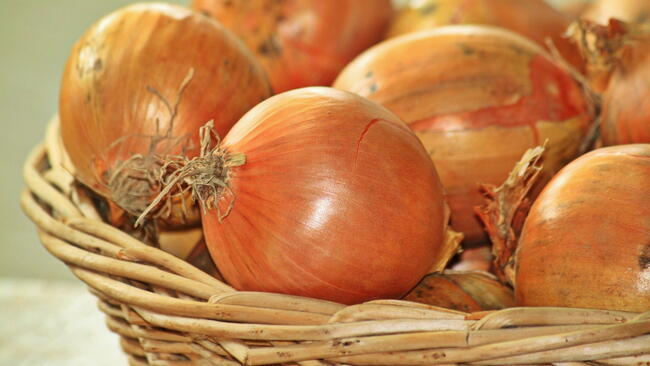
- Onions: ‘Patterson’ is a good keeper. These plants are easily grown from seed and fairly trouble-free. Be sure to give them lots of water.
- Garlic: ‘Bogatyr’ and ‘Music’ have large cloves, but ‘Chesnok Red’ seems to keep the longest without sprouting.
Potatoes and Sweet Potatoes
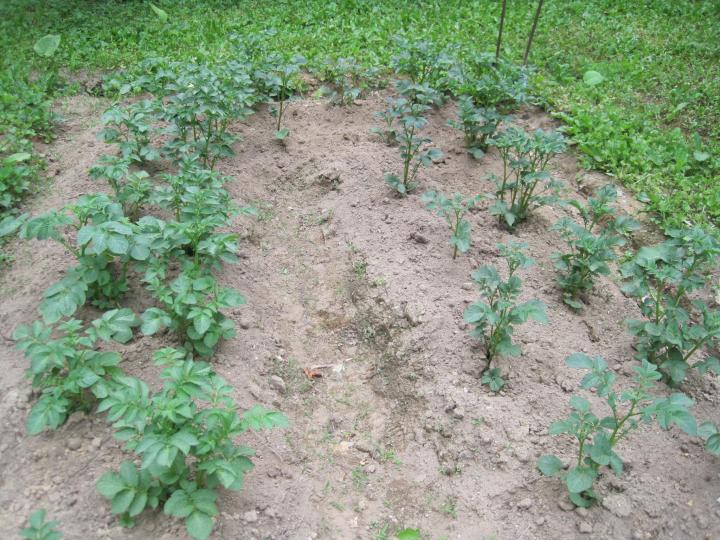
- Potatoes: Everyone has their favorites, but ‘Kennebec’ is a good producer of large-sized potatoes that keep for a long time in a cool, dark place. Of course, we grow many other varieties, but none last as long as the ‘Kennebec’.
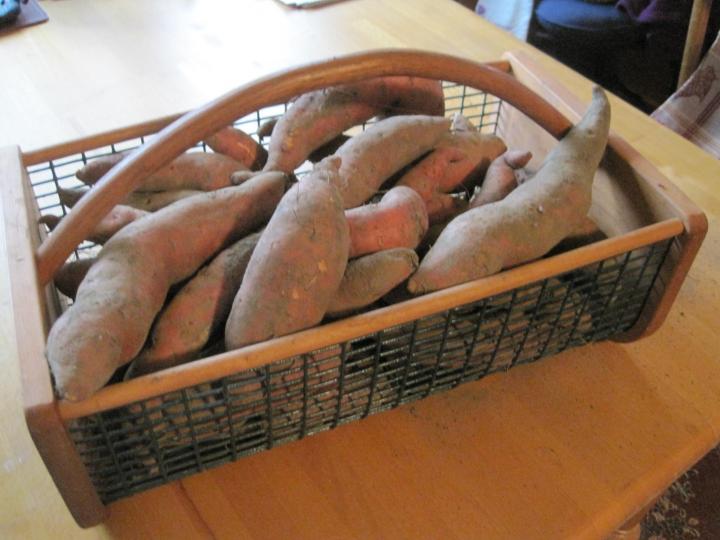
- Sweet Potatoes: We buy ‘Beauregard’ plants simply because they are available locally. They have given us good quantities of sweet potatoes. Even the ones that are too skinny to peel or bake are delicious when scrubbed and roasted with other vegetables.
Winter Squash and Cabbage
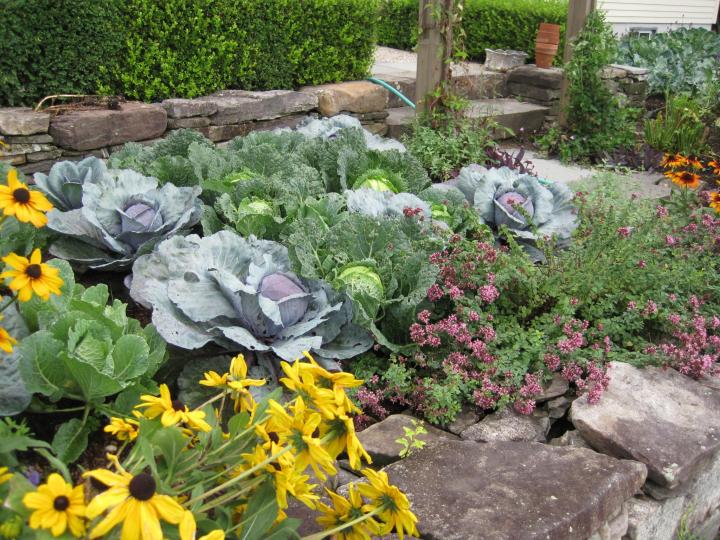
- Cabbage: Rock-hard red cabbages such as ‘Ruby Perfection’ and ‘Super Red’ and late varieties like ‘Brunswick’, ‘Late Flat Dutch’, and ‘Bartolo’ have lasted a long time for us in the fridge. (I make sauerkraut as a last resort because I am the only one who will eat it!)
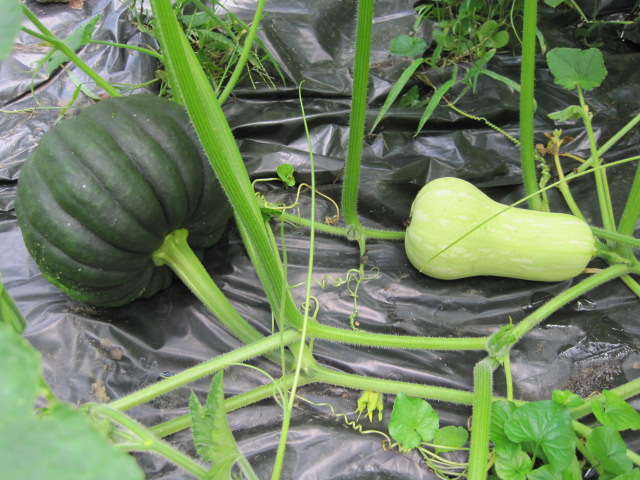
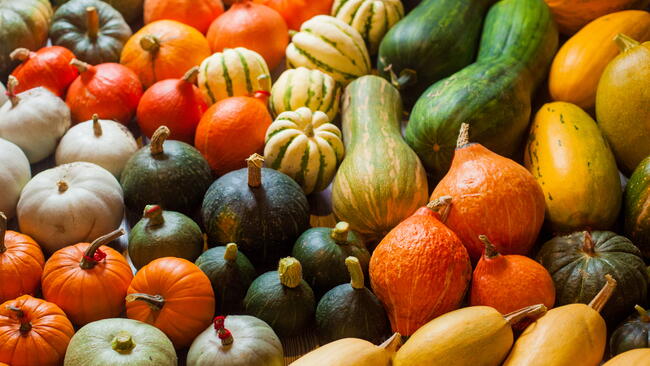
- Winter Squash: ‘Waltham Butternut’ and ‘Tetsukabuto’ grow the best for us and store very well. They are resistant to the squash vine borer and weather attacks from cucumber beetles and squash bugs. Both cultivars are exceptionally sweet and flavorful, and the ‘Tetsukabuto’ is very creamy.
Beans and Tomatoes
- Beans: ‘Rattlesnake’ beans are my favorite pole beans. They are delicious and tender when eaten pod and all, or the beans can be dried and used in soup all winter. See more green bean varieties.
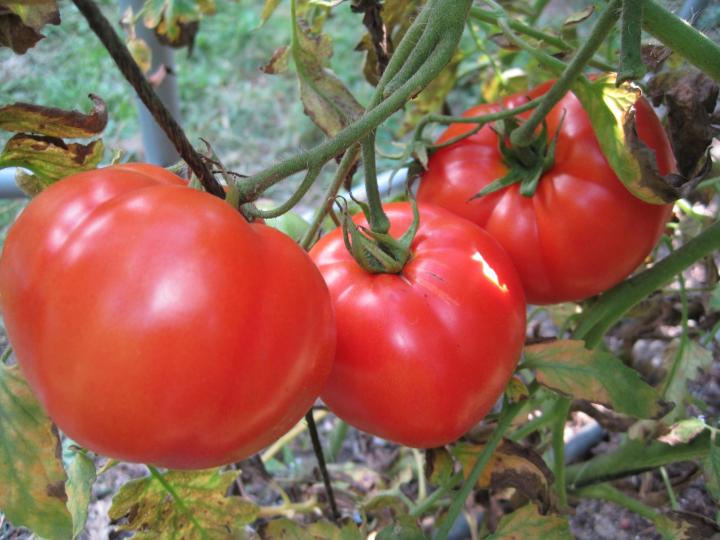
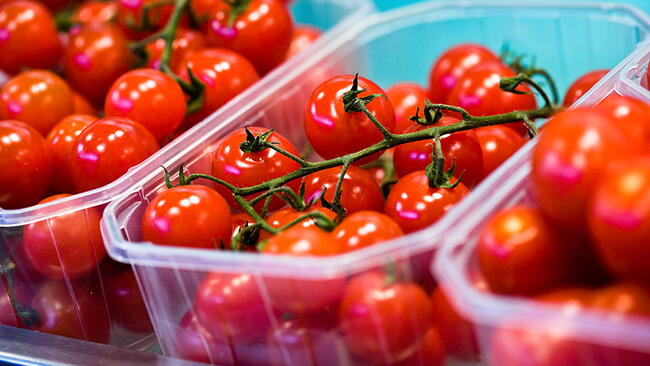
- Tomatoes: We grow about 40 different kinds, so it is hard to recommend just a few, but ‘Opalka’ and ‘Japanese Black’ are two that I grow every year for cooking. They are meaty and prolific. Last year we tried ‘Jersey Devil’, and it was excellent too!
Tips for Storing Your Vegetables
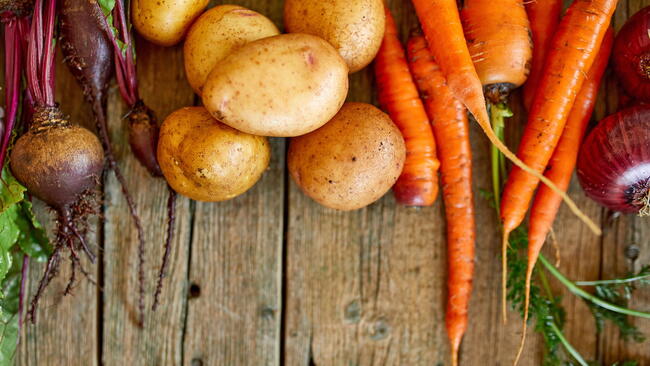
Many other vegetables can be part of your seasonal supermarket. Peppers, eggplant, cucumbers, carrots, beets, and greens, including chard and spinach, can be enjoyed fresh-picked or stored away for winter meals.
Two great books for you to read for inspiration (and recipes) are The Four Season Farm Gardener’s Cookbook, by Barbara Damrosch & Eliot Coleman, and The Homegrown Pantry, by Barbara Pleasant.
When it comes to storage, see the Almanac’s articles on how to store vegetables and fruit, and also how to store vegetables in a root cellar.
Tools and Resources for Planning Your Garden
Need help planning your first vegetable garden?
Check out our handy OFA Garden Planner, which calculates your local planting dates, proper garden spacing, and more! We’ve done the homework for you. With this smart tool, you can plan your garden right on your computer and print out your garden plan, plus get planting and harvesting reminders by email.
What vegetables are must-haves in your pantry garden? Share your favorites and storage tips below!
More Like This

Lack of water can cause flowers to drop off prematurely but it sounds like the flowers are not getting pollinated. Usually bumblebees are good for "buzz" pollinating eggplants. Since each flower has both male and female parts the pollen doesn't have to travel far and often just the vibration of the bee while it collects nectar and pollen is enough to do the trick. Sometimes just tapping the flowers will work to dislodge the pollen. To help nature along you can use a small paintbrush or Q-tip to spread the pollen to the tip of the pistil in the center of the blossom. It is best to do this in the morning when the flowers are completely open.
That is a huge area! You should be able to get a lot of plants in there! There are many ways you can configure this large a space from traditional rows to wide planting beds. The width and spacing of your rows depends on what you are growing. Look at the back of your seed packets. Most of them will tell you how far apart the rows should be along with how far apart the plants should be within the rows. Check out the Almanac garden planner. It will help you visualize the best way to organize your space.

Comments