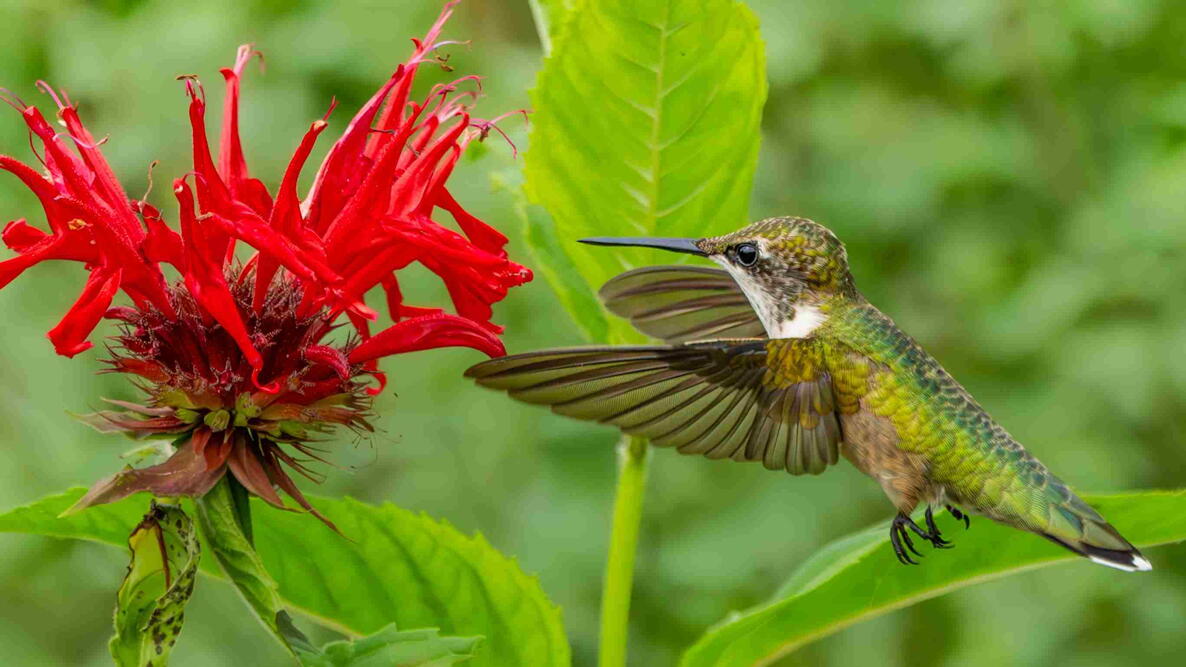
Caption
A ruby-throated Hummingbird hovers at a Scarlet Beebalm, drawn by its bright red, tubular blooms.
Attract hummingbirds with these vibrant, nectar-rich flowers.

Can’t seem to keep your garden humming with hummingbirds? You’re not alone! While about 20 species of these pint-sized pollinators flit through North America, they can be surprisingly picky guests—and they won’t stick around unless your garden offers the right nectar-rich blooms.
If you’d love to see more of these glittering little visitors zipping through your yard (and do your part to support pollinators), we’ve rounded up the top flowers that hummingbirds can’t resist—plus a few simple tips to make your garden their favorite hangout spot!
Hummingbirds In The Garden
While hummingbirds get a lot of attention for their iridescent feathers and mid-air antics, these tiny birds are highly efficient pollinators that visit somewhere between 1,000 and 2,000 flowers per day! As they feed on plant nectar, hummingbirds inadvertently transfer pollen between flowers, which helps plants fruit and reproduce, and enhances biodiversity. In the wild, hummingbirds are especially important pollinators for plants with tubular flowers, but in gardens, they visit a range of ornamentals and edible crops — including squash and melons that just won’t fruit without pollination.
Unfortunately, like most pollinators, hummingbird populations have been declining in recent years due to habitat loss, pesticides, and other stressors. Climate change, in particular, has been hitting hummingbirds hard as hummers are mostly migratory and are increasingly migrating out of sync with the flowering plants they’ve historically relied on during their spring and fall migration season. However, there is hope!
Growing plants that hummingbirds love intentionally in your garden can create waystations for migrating hummingbirds in spring and fall, and nesting and feeding sites during summer. Adding a hummingbird feeder, a mister attachment on your garden hose, and keeping your garden as organic as possible will make your space more inviting to hummers too. Most gardeners will only need to plan for hummingbird visits during the warmer half of the year; however, in areas like California, some species of hummingbirds are year-round residents, which means you may need to have plants available for them in winter as well.

Plants that Attract Hummingbirds
Hummingbirds feed from a wide variety of plants, but they’re especially drawn to plants with tubular flowers, which fit slender hummingbird beaks perfectly. Red and orange-bloomed plants are also more likely to catch hummingbird eyes, but hummers are also attracted to the colors pink, purple, and yellow.
If you want to make your garden as appealing to hummingbirds as possible, focus your attention on native plants and include plants with different flower colors, shapes, and bloom times. Even if you don’t have space for a large garden, adding a few hummingbird-friendly plants to a pot or planter on your porch can make all the difference for these tiny birds!

Annual Flowers
Annual plants often have flashier flowers than perennials, but they only last for a single season and die away with the cold. These plants can be great choices for containers, but they can also be interplanted with perennials or veggies for a pop of color and more hummingbird appeal. We’ve included a selection of true annuals in the list below, as well as some tender perennial plants that are usually grown as annuals but may survive winter in mild climates.
Plant Common Name: | Scientific Name: | Exposure: | Bloom Time/Season: | Color: | Native to North America: | Zone: |
Lantana | Lantana camara | Full sun | Spring to fall | Yellow, orange, red, pink, white, purple | No | 8 to 11 |
Pineapple Sage | Salvia elegans | Full sun | Summer to fall | Red | No | 8 to 11 |
Impatiens | Impatiens walleriana | Partial sun to full shade | Spring to fall | White, pink, red, coral, purple, orange | No | 10 to 11 |
Fuchsia | Fuchsia spp. | Partial sun | Spring to fall | Pink, red, purple | No | 10 to 11 |
Indian Paintbrush | Castilleja coccinea | Full sun | Spring to summer | Red, orange | Yes | 3 to 8 |
Zinnias | Zinnia elegans | Full sun | Summer to fall | White, yellow, orange, red, pink, purple, green | No | 2 to 11 |
Petunias | Petunia spp. | Full sun | Spring to fall | Pink, purple, white, red, yellow | No | 9 to 11 |
Cleome | Cleome hassleriana | Full sun to partial sun | Spring to fall | Pink, purple, white | Yes | 9 to 11 |
Calibrachoa | Calibrachoa spp. | Full sun | Spring to fall | Red, pink, yellow, white, purple, blue | No | 9 to 11 |
Nasturtiums | Tropaeolum majus | Full sun | Spring to fall | Orange, yellow, red, white | No | 9 to 11 |

Perennial Flowers
Unlike annuals, perennials return year after year and don’t need to be replaced each spring. That can make perennial flowers more affordable in the long run and save you the trouble of replanting your flower beds each year. Perennials that are native to your growing location are often the best choice for hummingbird gardens, as native plants are up to 4 times more appealing to pollinators than non-natives!
Plant Common Name: | Scientific Name: | Exposure: | Bloom Time/Season: | Color: | Native to North America: | Zone: |
Eastern Red Columbine | Aquilegia canadensis | Full sun to full shade | Spring to summer | Red, yellow | Yes | 3 to 8 |
Cardinal Flower | Lobelia cardinalis | Full sun to partial sun | Summer to fall | Red | Yes | 3 to 9 |
Bee Balm | Monarda spp. | Full sun | Summer to fall | Red, purple, pink, white | Yes | 3 to 9 |
Coral Bells | Heuchera sanguinea | Partial sun | Spring to summer | Green, yellow, bronze, orange, pink, peach, red, purple | Yes | 4 to 9 |
Beardtongue | Penstemon spp. | Full sun | Spring to summer | Red, pink, purple, blue, white | Yes | 3 to 9 |
Obedient Plant | Physostegia virginiana | Full sun to partial sun | Summer to fall | Pink, purple, white | Yes | 3 to 9 |
Salvias | Salvia spp. | Full sun to partial sun | Spring to fall | Purple, blue, red, pink, white, yellow | Yes | 3 to 11 |
Great Blue Lobelia | Lobelia siphilitica | Full sun to full shade | Summer to fall | Blue, purple | Yes | 3 to 9 |
Blazing Star | Liatris spp. | Full sun | Summer to fall | Pink, purple, white | Yes | 3 to 9 |
Milkweed | Asclepias spp. | Full sun | Spring to summer | Pink, purple, orange, white, yellow | Yes | 3 to 10 |

Shrubs and Vines
If you have a large garden and would like to offer even more food and sheltering resources for hummingbirds, you may want to include a few flowering shrubs or vines in your landscape too. These larger plants are often grown as backdrop or foundation plants in mixed flower beds, but many can also hold their own when planted solo as an eye-catching specimen plant!
Plant Common Name: | Scientific Name: | Exposure: | Bloom Time/Season: | Color: | Native to North America: | Zone: |
Rose of Sharon | Hibiscus syriacus | Full sun | Summer to fall | Purple, white, pink, blue | No | 5 to 9 |
Rhododendron | Rhododendron spp. | Partial sun | Spring to summer | Purple, pink, red, orange, blue, white | Yes (some types) | 4 to 9 |
Mandevilla | Mandevilla spp. | Full sun | Spring to fall | Pink, red, white, yellow | Yes | 9 to 11 |
Coral Honeysuckle | Lonicera sempervirens | Full sun to partial sun | Spring to fall | Red, orange, yellow | Yes | 4 to 10 |
Passionflower | Passiflora incarnata | Full sun to partial sun | Summer to fall | Purple, blue, pink, red, white, yellow | Yes | 5 to 10 |
Crossvine | Bignonia capreolata | Full sun to partial sun | Spring | Red, yellow | Yes | 5 to 9 |
New Jersey Tea | Ceanothus americanus | Full sun to partial sun | Summer | White | Yes | 4 to 9 |
Coastal Sweet Pepperbush | Clethra alnifolia | Full sun to full shade | Summer | Pink, white | Yes | 4 to 9 |
Meadowsweet | Filipendula ulmaria | Full sun to partial sun | Summer to fall | White | Yes | 3 to 9 |
Steeplebush | Spiraea tomentosa | Full sun to partial sun | Summer to fall | Red, pink, purple | Yes | 3 to 8 |
Factors To Consider When Choosing Flowers
Selecting the right plants can make your garden more appealing to hummingbirds, but it’s also likely to attract other pollinators, including bees and butterflies. Here are a few more tips to help you pick the perfect plants for your garden and make your garden an oasis for all the pollinators you love!
- Focus on natives. Native plants generally need less maintenance and are more attractive to hummingbirds and other pollinators than non-native plants.
- Choose tubular flowers. Hummingbirds are most likely to visit plants with long, tubular flowers and orange and red coloration.
- Pick plants with different bloom times. Growing plants that bloom at different times of the year will ensure hummingbirds always find something tasty to eat — no matter when they visit.
- Plant in drifts. Growing plants in groups of 3 or more makes garden designs look more natural and also makes it easier for hummingbirds to feed.
- Grow organic. Whenever possible, choose plants that are grown organically or start your own plants from seed. This will reduce the pesticides in your garden and make your space safer for hummingbirds.

More Like This



Comments