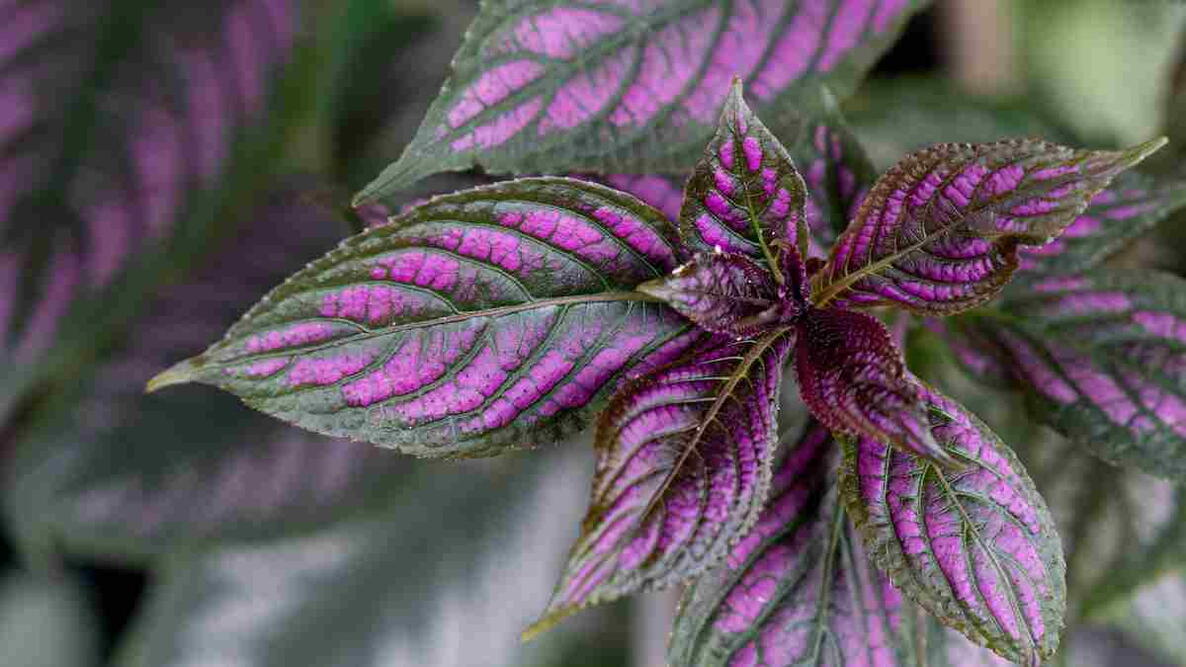
Caption
Velvety, iridescent purple leaves give Persian Shield its unmistakable glow.

If there’s one plant that can disarm you with its stunning foliage alone, it’s the Persian shield. This tropical beauty demands attention with iridescent, purple and green leaves that seem to sparkle in the light, and a fast growth rate that makes it perfect for indoor and outdoor spaces that need extra color fast. These plants may be a little harder to keep than your average tropical, but with the simple care tips in this guide, you should be able to drop your guard and grow Persian shield plants successfully without breaking a sweat!
About Persian Shield Plants
A member of the Acanthus family, Persian shield is native to Myanmar and grows wild in warm, humid tropical forests, where it takes advantage of the dappled shade cast by taller trees and shrubs. As a cultivated plant, the Persian shield can be grown perennially outdoors as a small shrub in zones 8 through 11, but these plants are highly sensitive to cold and most commonly kept as smaller annuals in cooler locations. With a little extra attention and humidity, Persian shield plants can also be grown indoors as houseplants, where their shield-shaped leaves show best in bright, indirect light.

When mature, Persian shields can grow up to 5 feet tall outside, but they stay much smaller in cold climates and containers and can be kept even more compact and bushy with regular pruning. These plants eventually produce inconspicuous purple, cone-shaped flowers in fall and winter, but these are usually pinched away as they aren’t particularly flashy and can draw energy away from the plant’s leaves and make them look dull. Even with the flowers removed, however, Persian shield plants usually look drab as they age and set flower buds, so most growers replace them every few years or grow new plants from stem cuttings.
I love growing purple plants in my garden and home, and I think Persian shields look particularly beautiful when paired with other dark, dramatic plants, such as elephant ears, velvet plants, black mondo grass, and ornamental peppers. Dark Persian shield foliage also displays well beside plants with silver-toned or chartreuse green leaves – such as sweet potato vines, lamb’s ear, coleus, and dusty miller – as well as plants with purple or orange-colored blooms, like marigolds and verbena. If you have pets afoot, you don’t need to fret about Persian shields either – they’re non-toxic to pets and humans!

Potting and Repotting

Persian shields that are grown as houseplants or as containerized outdoor plants need to be repotted every few years if you grow them perennially. Here’s how!
How Often to Repot
Repot Persian shield plants every 2 to 3 years, or when they outgrow their pots.
When to Repot
The best time to repot Persian shields is in spring, but you can repot them in fall if you’re overwintering outdoor plants indoors.
How to Repot
- Remove the old pot: Gently lift your plant from its old pot by holding the stems and giving the pot a gentle wiggle.
- Use fresh soil: Choose a well-draining container that’s only 1 or 2 sizes larger than your existing pot and use a quality potting mix.
- Prune the roots: Tease apart the plant’s roots to remove most of the old soil, then use sterilized scissors to trim them back by an inch or two. Root pruning helps manage the size of these plants and keeps them from becoming unruly!
- Pot it up: Repot the Persian shield in its new pot at the same depth the plant was growing in its old container. Then, water well and return your plant to its original growing location.
Both indoor and outdoor Persian shields benefit from regular pruning, which prevents floppy stems and makes plants grow bushier. Just pinch overgrown stems back to a leaf node from spring through fall, but avoid pruning plants in winter.
Propagation
Most growers replace Persian shield plants every few years when their leaves fade and their stems become woody. However, you can create more plants from the Persian shields you already own by propagating the plants’ stems before you throw them in your compost heap.
- Time it right: Persian shield cuttings are usually propagated in spring to early summer, but you can also propagate them in early fall before frost kills your plants.
- Take healthy cuttings: Harvest 3 to 4-inch-long stem cuttings from healthy, softwood Persian shield stems using a sharp, sterilized knife or pair of pruners. Make your cut at a leaf node and then remove any leaves that are growing around the base of each cutting.
- Root in soil or water: Place the cut stem ends in a glass filled with an inch or two of water, or dip the cut stems in rooting hormone and plant them in small pots filled with a damp potting mix. Position the cuttings in bright, indirect light, refresh the water in the propagation glasses every few days, and water the cuttings in soil just enough to keep the soil evenly moist.
- Repot if needed: Persian shield cuttings should sprout roots in about 3 to 4 weeks. If you propagated Persian shields in water, transplant the cuttings into pots filled with potting mix once their roots are about 1 to 2 inches long.

More Like This

Comments