Planting and Growing Pine Trees

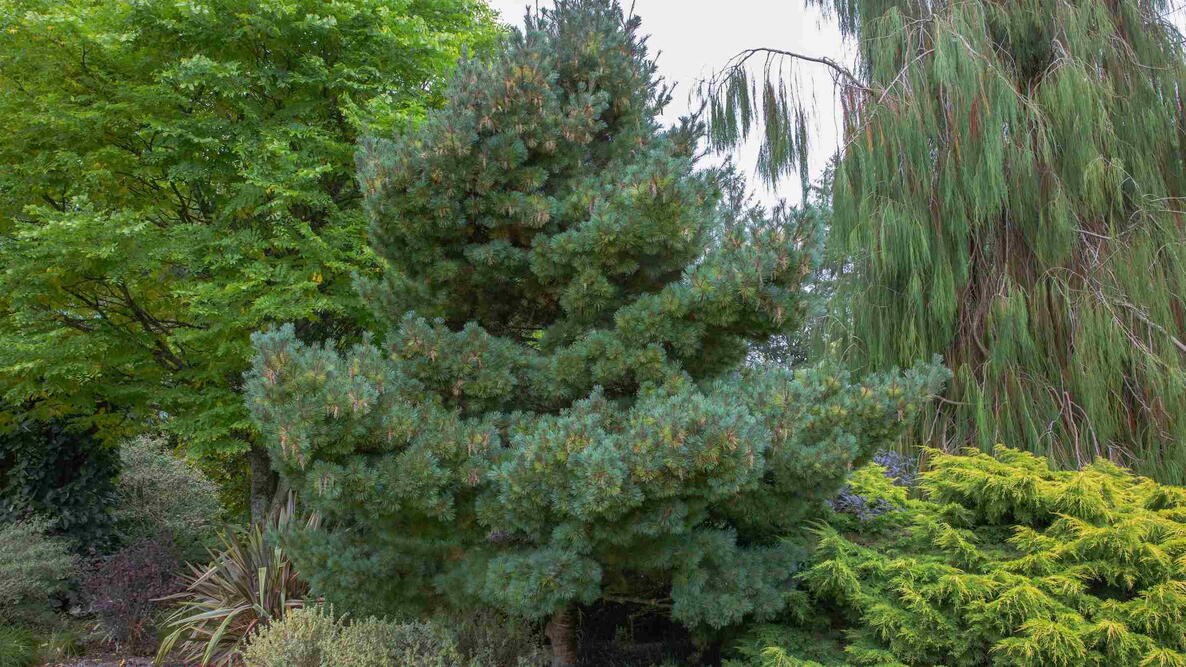
Dwarf Eastern white pine with blue-green needles growing in a residential garden

Caption

Choosing the right size pine tree ensures it fits comfortably in your space for years to come. 

Photo Credit
David Maddock
Botanical Name
Pinus spp.
Plant Type
Sun Exposure
Soil pH
Hardiness Zone
Subhead

A beginner-friendly guide to choosing, planting, and caring for pine trees in your yard.

Written By: Andy Wilcox Master Gardener and Gardening Contributor

Always green, even in winter, stately and cheerful, pine trees are long-lived evergreens that add beauty, privacy, and year-round structure to a yard. If you’re a beginner, the key to success is simple: plant at the right time, choose the right location, and give your tree enough space to mature.

Best Time to Plant Pine Trees:
Early spring, as soon as the ground can be worked, is ideal for bare-root trees. Container-grown pines can be planted anytime during the growing season, though spring and early fall are easiest for establishment.

Planting

When to Plant Pine Trees

Pines are commonly bought either bare-root or as young containerized saplings. Bare-root pines can and should be planted as soon as you can work the soil in spring, after the frost is out of the ground.

Containerized pines can be held like a potted plant until you have time to plant them. While spring is traditional, they can be planted at any time in the growing season. If you plant them in the heat of summer, pay closer attention to watering until they become established.

Where to Plant Pine Trees

Most pines like full sun, although most are tolerant of partial shade. Likewise, all pines prefer good drainage, although a few will tolerate seasonally wetter sites. Avoid constantly wet or swampy locations.

Of prime importance is ensuring there is room for your pine to grow to maturity. A pine might be 2 feet tall now, but could be 20 feet tall in 10 years—and much wider. Avoid planting under overhead power lines, over septic fields, immediately next to driveways, sidewalks, or buildings, or near a swimming pool. Don’t plant a pine where it will someday shade your vegetable garden.

How to Plant a Pine Tree

Planting a pine depends on whether it is bare-root, plug, or containerized. While the method for planting each is different, the care afterward is the same.

For bare-root and plug pine seedlings

  • Soak the roots for several hours in a bucket of water before planting.
  • Using your shovel or a tree planting bar, make or open a deep slot in the soil, at least as deep as the roots of the pine seedling.
  • Insert the roots into the soil cleft, avoiding bending them into a J-shape. They need to be straight.
  • Close the planting slit tightly and step gently around the tree to firm the soil. Water well.

For containerized young pines

  • Remove the sod.
  • Dig a hole the same depth and twice as wide as the container. Make it bowl-shaped with shallow sides.
  • Loosen the soil around the bottom and edges of the hole.
  • Set the tree so the top of the rootball is level with the surrounding ground.
  • Prune any girdling or circling roots.
  • Backfill with soil, tamp firmly to avoid air pockets, water well, and apply mulch evenly around the stem—without touching the trunk.

Before you head to the nursery, though, it’s worth taking a moment to choose the right pine for your space. Not all pines grow the same way, tolerate the same climates, or fit comfortably in a typical yard. A little forethought now can prevent decades of regret later.

A Word About Choosing the Right Pine Tree

Since pine trees are a large and diverse group, it can be difficult to narrow down which one is a good fit for your yard. Start by answering these questions before you plant.

  • How large is your space?
    Some pines remain small trees, even when mature. Others grow into full-sized forest trees and may, in 10–15 years, be taller than the house. As the tree grows, will it shade out gardens, block access, get too close to power lines, or drop sap on your car? A pine might look modest when planted, but it won’t stay that way.
  • Is it cold-hardy in your location?
    While pines are generally tough trees, some are less tolerant of severe cold, and others don’t do well in the extreme heat of the South. Check your USDA plant hardiness zone (or Canadian equivalent) and choose a tree suited to your winters and summers.
  • Is it regionally appropriate?
    Red pine (Pinus resinosa) is a fairly fast-growing tree found in colder regions of the eastern United States. However, it will struggle or fail when planted in the South—even if winter temperatures there fall within its tolerance. Keeping to regionally appropriate pines improves long-term success.
  • Are there disease considerations?
    Some pines are part of disease cycles involving other plants. For example, white pine (Pinus strobus) is a beautiful yard tree, but plants in the genus Ribes (currants and gooseberries) can host white pine blister rust, which damages young white pines. If you grow currants or gooseberries, consider a different species.
  • Are deer a problem in your area?
    While deer will eat almost anything when hungry, they are often selective about browsing young pines. Some species are preferred snacks; others are rarely touched. Your local forestry office or extension service can advise which pines tend to be less appealing to deer in your region.

Growing

Plant your pine in a sunny spot with decent drainage, and it will likely take care of itself. During the first year, provide extra water for the first 6–8 weeks after planting and during dry periods. In year two and beyond, established pines typically do not need regular watering or fertilizing.

Mulch around the tree to keep grass and weeds down and help maintain soil moisture during dry weather. Apply mulch 2–4 inches thick, but do not let it touch the trunk. Keep it in a flat ring rather than piling it into a mound. Pine needles—often called pine straw—make an attractive and effective mulch; see our guide to using pine needles as mulch for tips and common myths.

Pine needle mulch spread around flowering plants in a garden bed
Pine straw (fallen pine needles) makes an attractive and effective mulch for flowerbeds and garden borders. Credit: JJ Gouin

How Long Does a Pine Tree Take to Grow?

Pine trees are relatively fast-growing among conifers, but they are still long-lived trees that take time to reach full size. Once established, many species grow up to two feet per year. However, it may take 10 to 20 years for a pine to reach a substantial height, and several decades to reach full maturity.

Like many perennials, trees often follow the familiar pattern of “sleep, creep, leap.” In the first year after planting, growth is modest as the roots establish. The second year brings steadier growth, and by the third year, the tree begins putting on more noticeable height.

Growth rate varies by species. Fast-growing species such as loblolly pine may grow quickly in height, while dwarf varieties like mugo pine grow much more slowly.

How to Prune Pine Trees

Pines don’t typically need pruning unless you are shaping a Christmas tree or topiary. In most cases, you’ll only need to remove broken, damaged, or dead branches to maintain the tree’s health and appearance.

Avoid pruning the central growing stem, called the leader. Pines have only one leader. If it is cut or damaged, the tree may stop growing vertically or develop a misshapen form.

If you are new to pruning, review the basic principles in our guide to pruning trees and shrubs before making major cuts. Proper technique helps prevent unnecessary stress and reduces the risk of disease.

Timing also matters. While light corrective pruning can be done as needed, larger structural pruning is best done at the appropriate season; see our advice on when to prune trees and shrubs for general guidance.

Pests/Diseases

Even hardy trees can occasionally develop problems. Browning needles, dieback, or stunted growth can signal a problem. Identifying the symptom is the first step toward finding the cause.

Why Are My Pine Needles Turning Brown?

It is normal for pines to shed older, interior needles each year. If browning occurs only on inner needles in fall, it is likely seasonal needle drop.

However, browning at branch tips, widespread discoloration, or rapid dieback may signal drought stress, root damage, or disease. Newly planted pines are especially prone to browning if they are not watered consistently during their first growing season.

In colder climates, winter wind, sunscald, and heavy snow can also cause browning or breakage. Young trees are particularly vulnerable. Learn more about protecting trees and shrubs in winter to reduce seasonal damage and stress.

Why Is My Pine Tree Turning Yellow?

Yellowing needles can be a sign of poor drainage, compacted soil, or nutrient imbalance. Pines prefer well-drained soil. Constantly wet conditions can suffocate roots and lead to decline. Improving soil structure and mulching properly can prevent many stress-related problems; see our guide on how to mulch for general techniques and best practices.

Common Pine Tree Diseases

One of the most well-known pine diseases is white pine blister rust, which affects five-needle pines such as eastern white pine. This disease involves plants in the genus Ribes (currants and gooseberries) as alternate hosts. Removing nearby host plants and selecting resistant varieties can reduce risk.

Other fungal diseases, including needle casts and tip blights, may cause browning or spotted needles. Good air circulation and proper spacing help reduce disease pressure.

Common Pine Tree Pests

Pine sawflies, bark beetles, and weevils can occasionally damage trees. Healthy, unstressed pines are far less attractive to pests. Avoid mechanical injury to trunks and provide proper spacing and sunlight to keep trees vigorous.

When to Call an Expert

If more than one-third of the tree canopy is affected, sap is oozing from the trunk, or decline happens rapidly, consult your local cooperative extension office or a certified arborist. Early diagnosis can prevent further damage.

Wit and Wisdom

  • Dwarf pines and other conifers can be grown in large planters, making ornamental statements for a patio or deck.
  • Avoid planting pines where they might drop pitch in places you don’t want sticky.
  • All pines shed older needles. If they aren’t too thick, mow them. If they are, rake them for pine straw mulch.
  • If deer are a problem, foresters sometimes protect the central leader withtechnique called bud capping. Importantly, you must do this before the deer nips off the growing tip.

Cooking Notes

Some pine needles, particularly from white pine, have even been used to make tea; read more about white pine needle tea and traditional uses.

About The Author
Andy Wilcox

Andy Wilcox

Master Gardener and Gardening Contributor

Andy Wilcox is a freelance writer, flower farmer, and master gardener with over 25 years of experience in gardening, horticulture, and forestry. He is the co-owner of Stone’s Throw Flowers, a business...