Caption
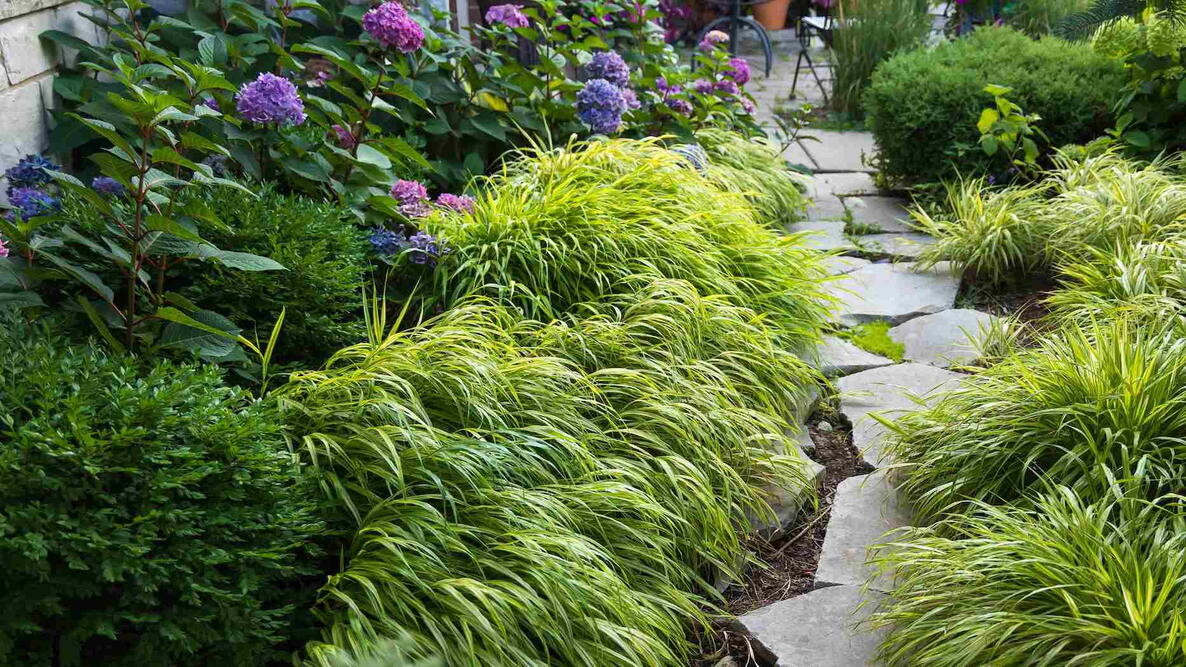
This limestone path winds through Hakone grass with hydrangeas adding pops of pink and blue. A shade garden dream!

Looking to add a splash of golden grace to your shady garden? Meet Japanese Forest Grass (Hakonechloa macra). Prized for its graceful, cascading habit, it’s perfect for borders, walkways, or even as a soft groundcover that whispers “welcome” in every breeze.
What Is Japanese Forest Grass?
Dubbed one of the best ornamental grasses for shade by the University of Wisconsin, Japanese Forest Grass (aka Hakone grass) quickly steals the spotlight in any garden. This deciduous perennial forms neat clumps of slender, graceful leaves that sway gracefully up to 18 inches tall and about as wide. Native to Japan, it thrives in USDA Zones 5 to 9, though it prefers cooler summers and may sulk a bit in hotter spots.
What makes Hakonechloa truly special? Its variety of dazzling cultivars showing off stripes of gold, green, and creamy white—adding texture and light to dim corners of your garden. Easy to grow, deer-resistant, and happily spreading by division, it’s a charming companion for a shade garden where many plants fear to tread.
But here’s the scoop: Japanese Forest Grass isn’t a turfgrass. It grows slowly in clumps, isn’t fond of foot traffic, and prefers to be admired rather than stomped on.

Japanese Forest Grass FAQ
Does Japanese Forest Grass die back in winter?
Yes, Japanese Forest Grass is a deciduous perennial that typically dies back in winter. Its foliage may turn brown and wither, but it usually regrows in spring.
Is Japanese Forest Grass deer resistant?
Japanese Forest Grass is generally considered deer resistant. Deer tend to avoid its texture and taste, making it a good choice for gardens in areas with deer.
Is Japanese Forest Grass invasive?
No, Japanese Forest Grass is not invasive. It is a well-behaved ornamental grass that spreads slowly and does not aggressively take over garden spaces.
Is Japanese Forest Grass toxic to dogs?
Japanese Forest Grass is nontoxic to dogs and safe to plant in pet-friendly gardens.
Where can I buy Japanese Forest Grass?
You can find Japanese Forest Grass at many garden centers, specialty nurseries, and online plant retailers. Look for reputable sources that offer healthy, well-established plants.
What to Plant With Japanese Forest Grass
Japanese Forest Grass shines even brighter with the right garden companions. Mix and match to create texture-rich, shade-loving combinations that look great in every season. Here are some top picks:
- For bold contrast: Hosta, Heuchera, Brunnera ‘Jack Frost’, and ferns
- For flowers in the shade: Astilbe, Hellebores, Bleeding Heart, Toad Lily
- For winter structure: Carex (sedge), dwarf conifers, boxwood
- For low-growing layers: Sweet Woodruff, Epimedium
Read Next
Growing
Growing and caring for Japanese Forest Grass is refreshingly low-maintenance once it settles in. Here’s how to give this graceful shade lover the best chance to thrive.
Soil Matters
First things first: soil quality makes all the difference. Japanese Forest Grass prefers rich, moist, well-draining soil—the kind that feels like chocolate cake when you dig in. Avoid heavy clay, which holds water and can suffocate roots.
Aim for a slightly acidic to neutral pH. If your soil is too alkaline, the plant might not be as lush or vibrant.
Light & Location
This is not a sun worshipper! Japanese Forest Grass does best in part shade to full shade. In fact, its colorful foliage looks even more vivid in shady spots. Too much hot sun can scorch the leaves, especially in warmer zones.
Growth Habit & Hardiness
Hakonechloa grows by slow-spreading rhizomes or stolons, forming tidy clumps over time. It’s not invasive and tends to stay where you plant it—just slowly getting fuller and more fabulous.
- The species (H. macra) is hardy to Zone 4,
- Most cultivars (like ‘Aureola’ or ‘All Gold’) are hardy to Zone 5.
Care Tips
In fall, the leaves take on lovely shades of copper, gold, or reddish pink before dying back for winter. Hold off on cutting back dead foliage until late winter or early spring—the extra cover protects the crown.

Add a layer of mulch in fall to help prevent frost heaving, especially in colder climates.
Division & Maintenance
Japanese Forest Grass is a slow grower, so there’s no rush to divide it. You might not need to touch it for several years—but when you do, it’s a great way to share the beauty with friends (or expand your own shady empire).
Types
There are quite a few cultivars of Japanese Forest Grass to choose from, but here are a few to get you started:
| Cultivar | Foliage Description | Growth Habit | Best Feature |
|---|---|---|---|
| ‘Aureola’ | Bright golden-yellow leaves with fine green stripes | Gently arching, clump-forming | Award-winning and eye-catching—great for lighting up shady spots |
| ‘All Gold’ | Solid chartreuse to golden-yellow leaves | More upright, compact | Super bright and clean—perfect for bold color contrast |
| ‘Samurai’ | Variegated green leaves with creamy-white edges | Soft, spreading mound | A classic variegated option with graceful movement |
| ‘Fubuki’ | Striped white and green foliage | Mounding form | Cooler-toned and elegant—adds a silvery shimmer to shade gardens |

More Like This



Comments