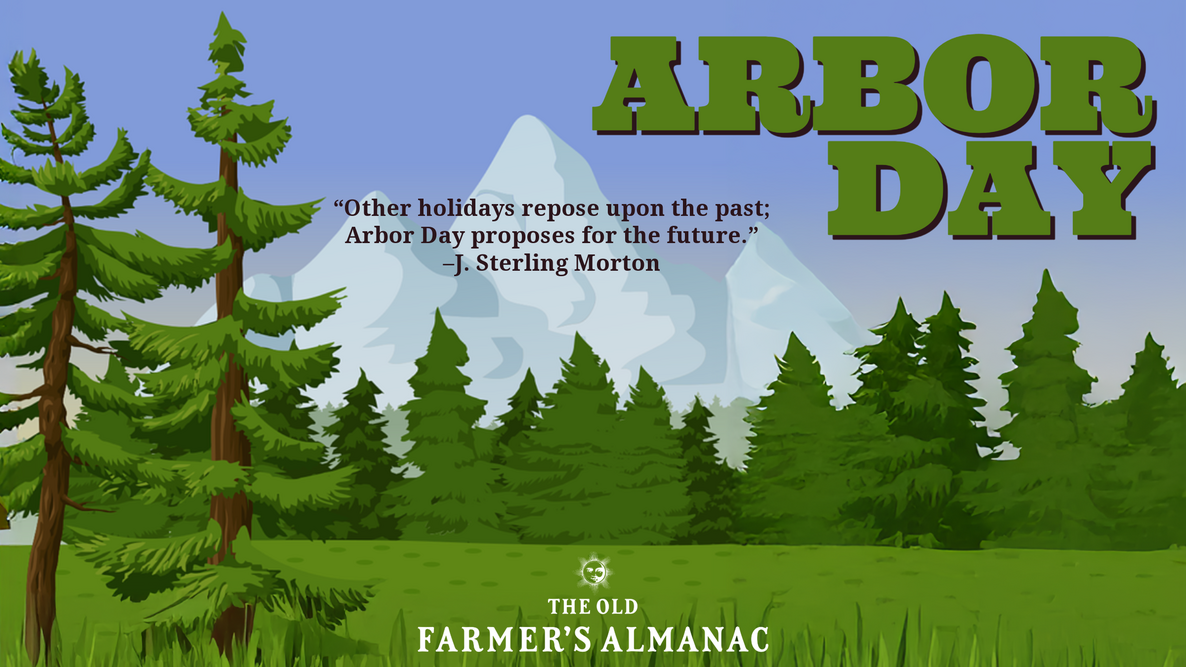

Arbor Day sprouted from the mind of a zealous tree lover named Julius Sterling Morton. A popular Arbor Day tradition is to plant a tree in honor or memory of a loved one. Learn some interesting facts about this day, and learn about the power of trees, which support our well-being!
“Other holidays repose upon the past;
Arbor Day proposes for the future.”
–J. Sterling Morton
When Is Arbor Day?
Arbor Day is celebrated on the last Friday in April, although some states observe it on dates that better coincide with the local area’s planting times. For instance, Hawaii celebrates Arbor Day on the first Friday of November, and Alaskans celebrate it on the third Monday in May. Find out when your state observes Arbor Day.
| Year | Arbor Day |
|---|---|
| 2026 | Friday, April 24 |
| 2027 | Friday, April 30 |
| 2028 | Friday, April 28 |
| 2029 | Friday, April 27 |
What Is Arbor Day?
Arbor Day, much like Earth Day, is a holiday that celebrates nature.
Its purpose is to encourage people to plant trees, and many communities traditionally take the opportunity to organize tree-planting and litter-collecting events on or around the holiday.
What does he plant who plants a tree?
He plants cool shade and tender rain,
And seed and bud of days to be,
And years that fade and flush again;
He plants the glory of the plain;
He plants the forest’s heritage;
The harvest of a coming age;
The joy that unborn eyes shall see—
These things he plants who plants a tree.–Henry Cuyler Bunner (1855–96), in The Heart of the Tree
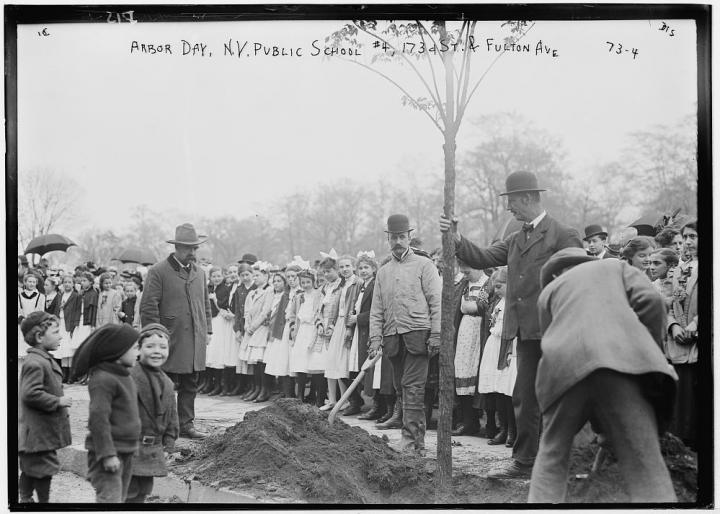
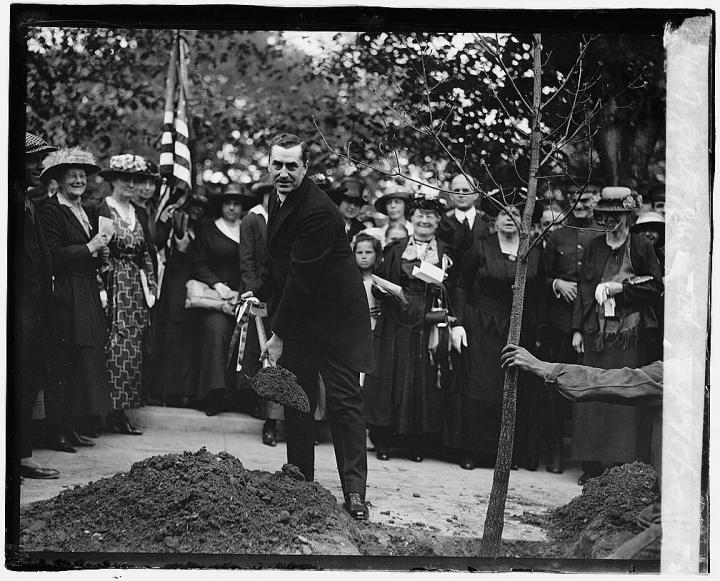
A popular Arbor Day tradition is to plant a tree in honor or memory of a loved one.
The History of Arbor Day
Julius Sterling Morton, an avid tree planter and enthusiast, created Arbor Day.
The first Arbor Day occurred on April 10, 1872, in Nebraska City, Nebraska. It’s estimated that nearly one million trees were planted on this day.
By 1885, Arbor Day had become a legal holiday in Nebraska. (The date was changed to April 22 to honor Morton’s birthday.) On that day, thousands of Nebraska City citizens turned out for one big party, including 1,000 schoolchildren who formed a parade.
Within 20 years of its creation, the holiday was celebrated in every American state except Delaware, which eventually joined in.
Morton found it particularly pleasing that schools across the country began celebrating Arbor Day by dedicating the trees they planted to special people.
Who Was Julius Sterling Morton?
Morton was born in Adams, New York, in 1832, but his life took a decisive turn on his wedding day in October 1854. After he and his bride, Caroline Joy French, were married in Detroit, they headed west for adventure in the wilds of Nebraska Territory. The couple settled on 160 treeless acres (the key word here is treeless).
Despite having a busy career and four sons, Morton planted thousands of trees on the homestead he called the Morton “ranche.” He planted an apple orchard, as well as peach, plum, and pear trees, plus cottonwoods, evergreens, beeches, and more.
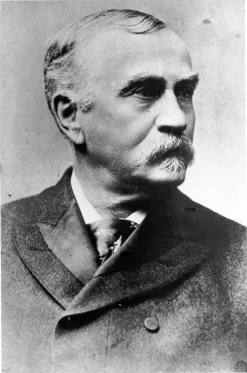
Morton took every opportunity he could to spread the word. He gave speeches and filled his newspaper with agricultural advice, urging Nebraskans to plant trees and try new crops.
Today, the family home, Arbor Lodge, is a state park in Nebraska City, Nebraska. Over the years, Arbor Lodge grew from a four-room home into a 52-room mansion, complete with a terraced garden, a pine grove, and 65 acres of more than 250 varieties of trees and shrubs.
J. Sterling Morton died on April 27, 1902, at the age of 70. Just a month earlier, he had written that he hoped to plant trees as soon as the weather turned warm. A statue of him stands in the National Hall of Fame in Washington, D.C.
Highlights from Morton’s Career
- Morton worked as a journalist and a politician, becoming secretary and acting governor of the Nebraska Territory from 1858 to 1861.
- In 1872, Morton declared: “If I had the power, I would compel every man in the State who had a home of his own to plant out and cultivate fruit trees.”
- In 1893, President Grover Cleveland appointed him U.S. Secretary of Agriculture. He also served on the Nebraska State Board of Agriculture and the State Horticultural Society.
Fun Fact: Arbor Day was almost called Sylvan Day, which means “wooded.” Several members of the Nebraska State Board of Agriculture favored it, but Morton argued that sylvan refers only to forest trees and that the name Arbor Day was most inclusive, covering forest trees and fruit trees.
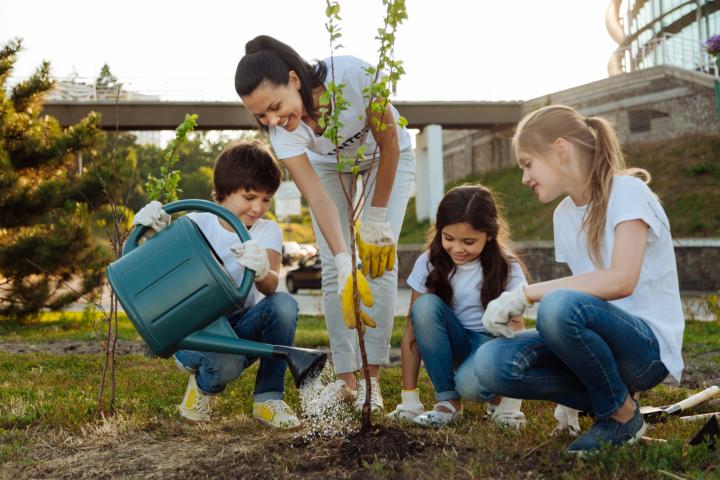
The Power of Trees
- Trees support our health and the health of our planet! They clean our air and water. They provide shade, which cools our urban areas. Even on a personal level, trees have been proven to calm us and reduce our stress levels.
- Trees also support wildlife and our entire ecosystem. One oak trees attracts thousands of pollinators and beneficial insects! Trees provide birds and aquatic animals with habitats. In addition, they provide humans with powerful medicine, materials for living, and agriculture.
- Finally, trees are our biggest allies as the world climate warms; they are a cost-effective way to pull carbon dioxide out of the atmosphere today. Planting even one tree makes a difference.
Early spring is a good time to plant trees. Enjoy our post on How to Plant a Tree! Also, watch our short video on How to Plant a Fruit Tree.
Let’s also take good care of the trees that we do have! Here are pruning pointers for shrubs and trees.
Do you celebrate Arbor Day? What types of trees do you have in your yard? Share with us below!

More Like This





Hi, Regina,
Yes, it would be good to at least prepare/amend the soil at and near the planting sites. Trees usually appreciate a healthy, somewhat loose (non-compacted), well-draining soil, especially around the root ball. It's best to first test your soil to see what the pH is and the kind of amendments/fertilizers that are needed (the link that Anne has listed in her reply gives you some details on that). Also, it is important to amend a clay soil to improve drainage, and to remove the rocks in the planting hole. Moisture-tolerant tree species may do better in heavy clay.
The depth of a tree planting hole for heavy clay should be two to three times as wide as the diameter of the root ball, and about the same depth as the root ball. (If you can not improve drainage, then the depth should be about 2 to 3 inches shallower than the rootball, so that water can drain away from the trunk.) Loosen the soil at the planting site and remove any rocks as best you can. Tree roots will, of course, grow beyond the root ball area, so loosening the soil beyond this area is beneficial to root growth. To improve soil structure, add one part coarse organic materials (such as compost; do not use fresh manure or commercial fertilizers, which will burn roots) to one to two parts soil in and around the planting area.
Hope this helps!
- « Previous
- 1
- 2
- …
- 10
- Next »

Comments