
Caption
Raspberry Shrub, Currant Plant, Strawberry And Other Berry Bushes In The Ceramic Pots On The Garden Terrace.
Big Flavor, Small Space: Grow Juicy Berries in Pots This Season

Want to grow fresh, flavorful fruit but short on space? Grab a few containers and get planting! With the right soil and care, you can grow raspberries, currants, and blueberries in pots—even if you’re working with a balcony or small backyard. Not only are potted berries easy to maintain, but they’re also more protected from pests and easier to harvest.
Why grow fruit in pots? Fruits grown in containers are easier to protect from birds and other critters, more disease-resistant, and easier to harvest. Potted berries can be picked when ripe by placing their container on a bed sheet or tarp and shaking the pot. Plus, you can grow fruit like blueberries even if your garden doesn’t have the right soil!
We will demonstrate the best potting mix to use for fruit, plus more tips for growing these irresistible crops in containers.
Growing Raspberries in Containers
Raspberries are always going to be a winner. Like all berries, they are absolutely loaded with vitamins and antioxidants—all the good stuff. They are highly versatile in the kitchen and, given what they cost in the grocery store, growing raspberries will give you plenty of bang for
your buck! Try a smaller variety perfect for container growing, under 3 feet tall; unlike traditional varieties with longer canes, there’s no need for supports. Plant in a wide container that holds about 8 gallons of potting mix to provide plenty of space for both the roots and the canes to spread out.
Raspberries prefer a slightly acidic soil, which helps prevent nutrient deficiencies. So while the bulk of my potting mix can just be a general-purpose mix, add in some peat-free potting mix for acid-loving plants, also sold as ericaceous, or rhododendron or azalea mix. We want a ratio of roughly 80% general-purpose potting mix to 20% acid mix. The acidic mix is soil-based, which will add extra weight and stability to the container. Soil holds onto moisture a bit better too, so it shouldn’t dry out as quickly.
Planting raspberries couldn’t be simpler. Remove them from their pots, then pick away at the roots if they have been tightly coiled up against the edge of the pots. Don’t be shy about this stage, as it will help the roots to find their way out into the fresh potting mix that little bit faster. Set them in at the same depth, firm them in, then give everything a thorough watering to settle the mix.
If you’re planting a bare-root plant, you can tell where the previous soil level was by the dark mark on the canes; make sure all of the darker area is covered. Finishing off with a natural mulch not only gives a really smart finish, it will also help to keep the roots cooler in hot weather. And organic mulches will naturally rot down over time. Something like a finer wood chip mulch is perfect.
See the Almanac guide on how to grow raspberries.
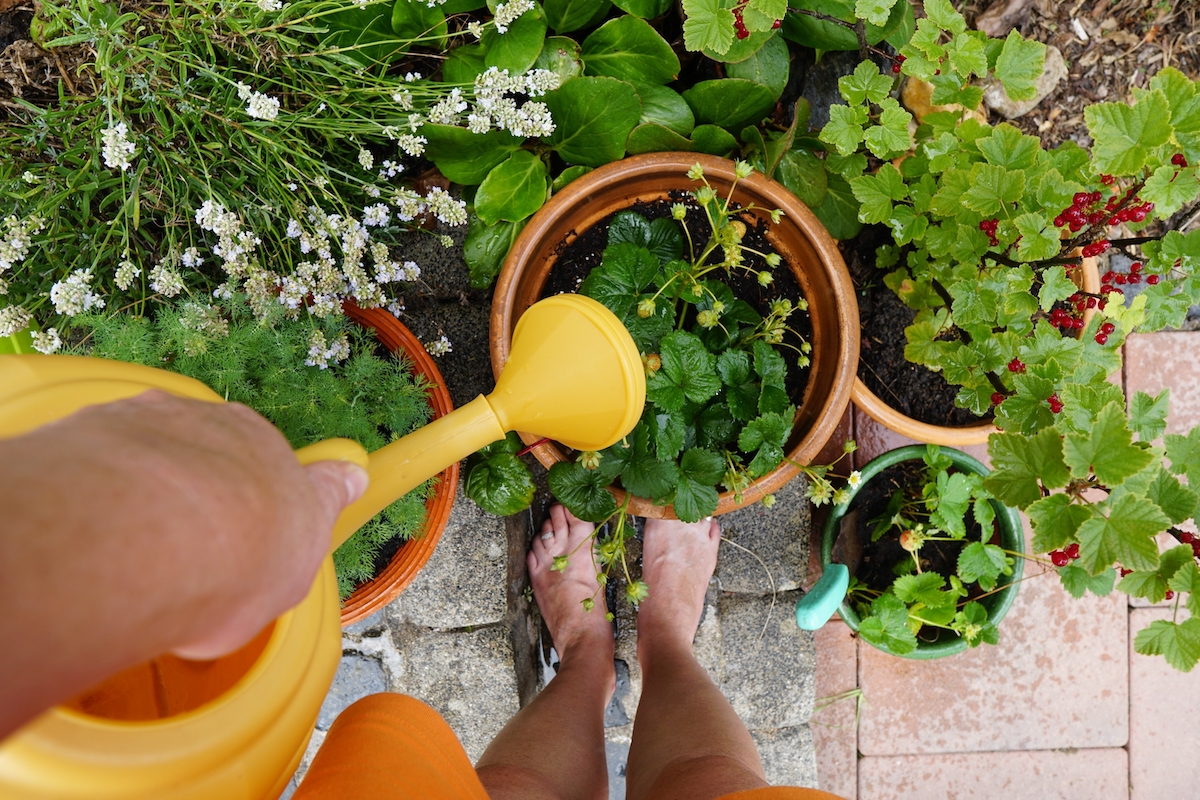
Credit: Julija Ogrodowski/Shutterstock
Growing Currants in Containers
Currants are superb in containers, too. Both red and white currants can be trained into compact cordons and fans, or grown as standard bushes. What patio, terrace, or balcony wouldn’t look better with one of these! Blackcurrants are also good to try, but as this is the most vigorous of the currants and can’t be trained, choose a more compact variety.
Red currants are certainly the most popular. Use a soil-based potting mix together with a container that’s at least 18 inches in diameter. Plant it just like the raspberries (above), teasing out the roots, then settling it in at the same level it was at before. Finish off with a mulch of bark chippings.
Currants grow best in a sheltered, sunny spot, but they’ll also tolerate a little dappled shade. During the growing season, they will need watering regularly to keep from drying out, but the bigger danger is getting too wet from heavy rains and the roots rotting as a result, so make sure excess water can drain out by simply raising the container up onto pot feet or pebbles. And if you’re somewhere that gets very cold winters, move them undercover or insulate the containers with something like bubble wrap to stop the roots from freezing too hard.
Feeding currants couldn’t be easier. Apply a liquid tomato feed every few weeks during the growing season or tickle in a slow-release balanced fertilizer at the start of spring.
Learn more about how to grow currants.
Growing Blueberries in Containers
Beeeautiful blueberries! Who doesn’t love snaffling them straight off the bush? But if they do make it into the kitchen, remember they can also be frozen just as they are—no prep needed. And that applies to all berries and currants. They’re such great freezer staples and can be on hand at any time of the year to bring a little burst of sweet joy whenever needed.
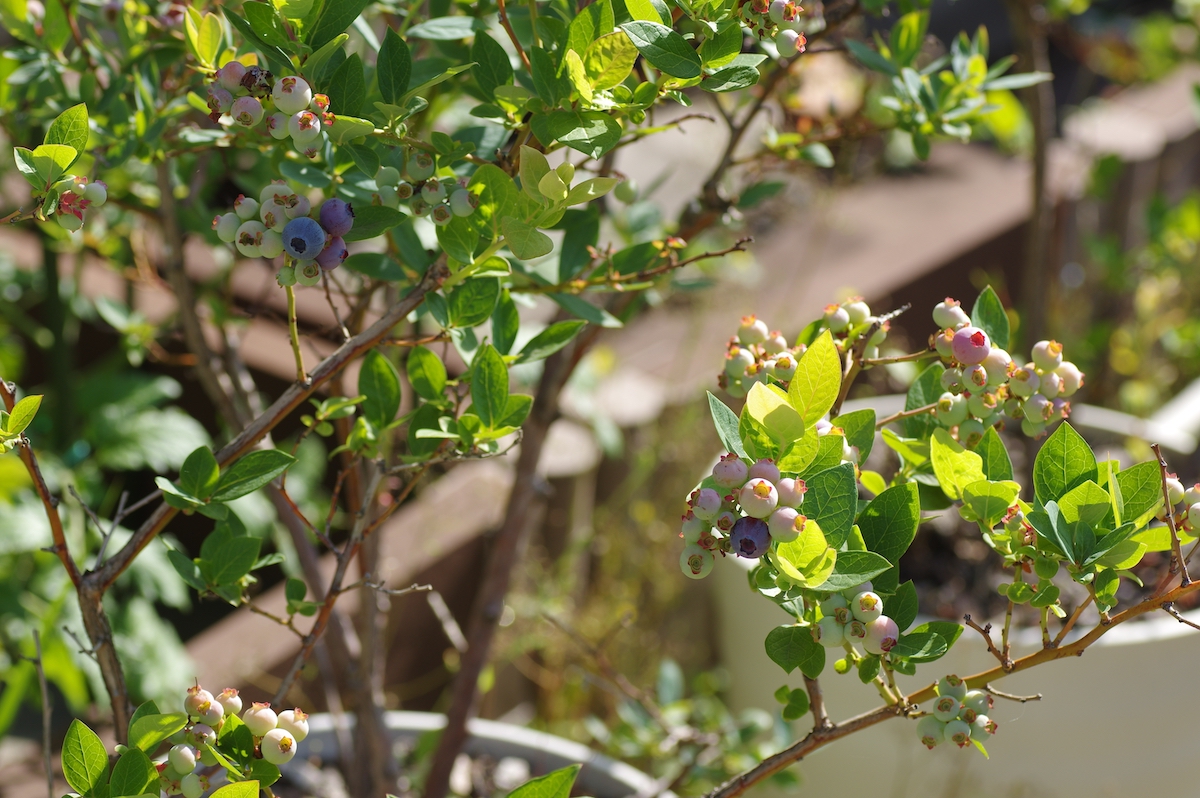
Credit: mutsu7211/Shutterstock
Blueberries need a really acidic soil to thrive, with a pH somewhere between 4.0 and 5.5. Get this right and offer them a sunny spot, and they’ll thrive. So for blueberries, you’ll once again need an acidic or ericaceous mix. Eek it out by adding, say, 30-40% garden compost to the mix, or even some wood chips.
After the first summer crop, you can pot your blueberries into a larger container in the spring; freshen up the top layer of soil by just scraping it out and replacing it with fresh soil. And then finish up with more wood chip mulch.
To keep the soil acidic and plants happy, it’s best to water blueberries using rainwater, and the same goes for all of our berry fruits. Once growth reaches full speed in spring, commence feeding every 3 weeks or so using an acid-loving plant feed.
Birds are notorious for stealing ripening berries! The simplest way to keep them off is to cover plants with netting. But don’t just drape the netting straight onto the plant. Instead, create a framework to sit the netting on. That way, the birds won’t be able to peck through it, and there’s less risk of them getting caught up in it, too. Something like a cane teepee works well, for example, or you could create more of a box framework if you have quite a few potted fruits to protect by attaching horizontal canes to uprights, and then draping the netting over that.
See the Almanac guide on how to grow blueberries.
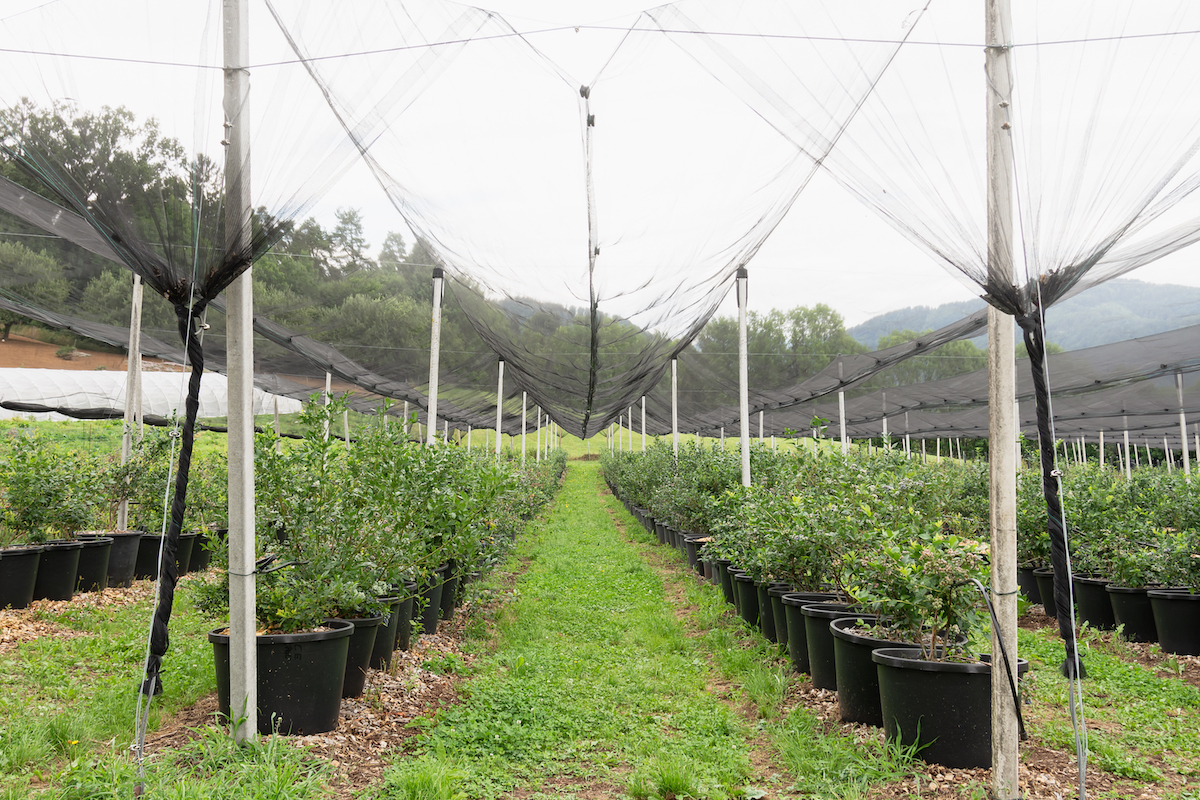
Credit: G. Chet/Shutterstock
Now learn about growing strawberries in containers!
Also, see how to grow dwarf citrus trees in containers.
Do you grow berries? What do you think about potting fruit? Please share your comment below!

More Like This




Wait to plant the bush in the yard. Enjoy the berries and then plant it in the ground. Please see our bluberry page at http://www.almanac.com/plant/blueberries. For northern regions we recommend an early spring planting before the plants bloom.
You can store the containers in your garage. You can wrap a blanket or two around the pots to insulated them a little bit. You will need to water the plants periodically over the winter, maybe two or three times. It is important to monitor soil moisture through the winter storage period. After a couple of years you may need to repot the plants in bigger pots with fresh soil.
For blueberries, we'd start out with one at least 12 inches wide by 18 inches deep.
Hi Sharon,
You don't need another bush, but yields will likely be higher if you have a different variety nearby. In addition to mulch, composted sawdust mixed into the soil is beneficial to the growth of the plant.
- « Previous
- 1
- 2
- …
- 10
- Next »

Comments