
Feed Your Garden With This Organic Liquid Fertilizer Tea—for Free!

Feed your plants—with other plants! It may sound strange, but you can use your own weeds and grass to make homemade fertilizer tea that’s 100% organic. It’s a great boost for your plants in midsummer when soil fertility is running low. Here’s how to make fertilizer tea at home.
Yes, garden plants appreciate a spot of tea now and then, too—just like I do—as a pick-me-up. No expensive Earl Grey or Darjeeling for them, though. Instead, I make a free fertilizer tea from plants, weeds, and grasses that I find on my property.
What Is Fertilizer Tea?
”Compost tea” and “manure tea” have long been mainstays of the organic garden. It is not hard to toss some compost into a bucket of water and let it steep for a few days to a few weeks, stirring daily.
“Fertilizer teas” made from plants are just as easy. Plus, they don’t require you to pick up a load of manure or use any of your precious compost.
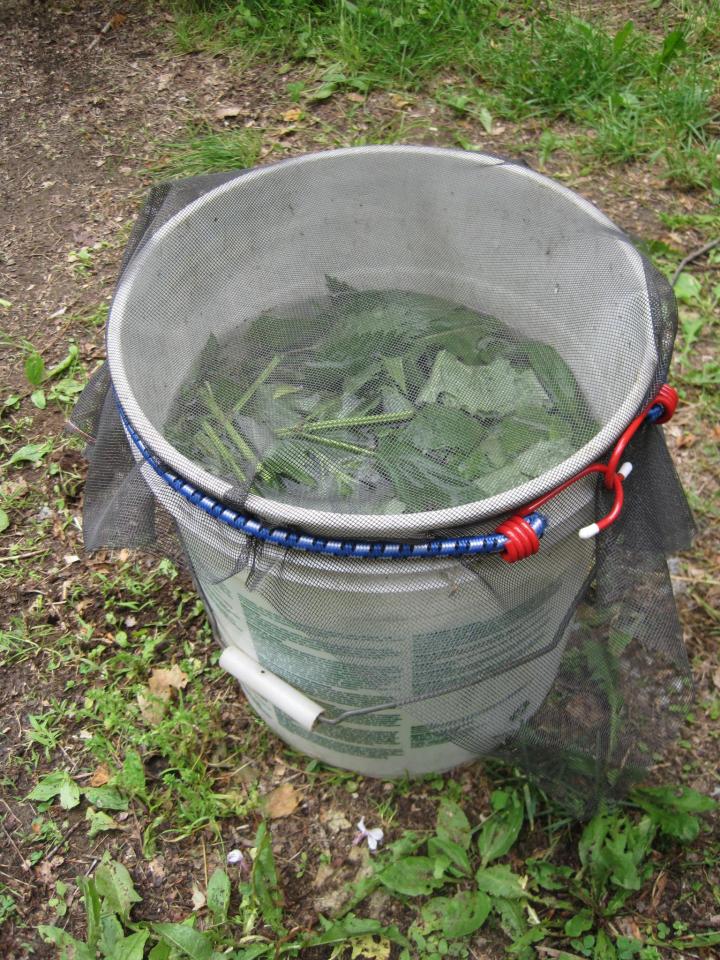
Making Fertilizer Tea
- Next time you are weeding the garden, throw chopped weeds into a bucket or trash can, chopping them up as you go.
- When the container is about half full, fill it with water. Don’t use chlorinated water; rainwater is the best (also free!).
- Screen the top to keep mosquitoes out. You can use a piece of screening or a row cover.
- Stir daily for 3 days to 2 weeks. Or, pour it from one bucket into another to mix things up and keep it aerated.
- Strain off the liquid to use as a fertilizer or foliar spray. After you strain off the liquid, return the solids to your compost pile. It can be diluted or used at full strength on established plants. Since plant leaves tend to absorb more nutrients more quickly than roots, foliar feeding is an efficient way to fertilize versus a soil drench.
Weeds are full of nutrients that they have absorbed from the soil, so it is only fitting to extract the water-soluble ones and return them to your garden plants.
Weeds and Plants to Chop Up for an Axtra Nourishing Fertilizer Tea
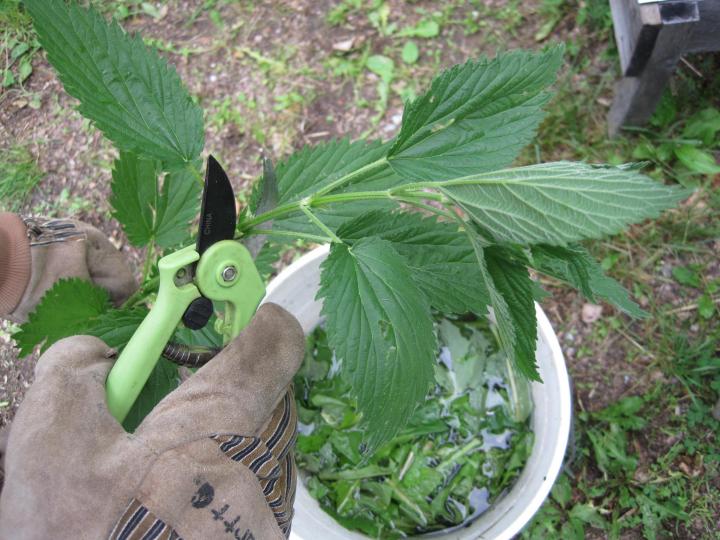
- Stinging nettle is high in nitrogen, calcium, iron, vitamins A, B, & C, phosphorus, potassium, boron, iron, zinc, selenium, and magnesium. A natural insect repellant, when sprayed on leaves it can help plants resist insect and fungal attacks. Learn more about stinging nettle’s many benefits.
- Alfalfa is high in nitrogen, vitamin A, folic acid, potassium, calcium, and trace minerals. If you don’t have access to it, you can use alfalfa hay, meal, or pellets. This is a “weed” whose growth I encourage in my garden, along with clover. Both are legumes and make a great soil-enhancing mulch or nitrogen-rich tea.
- Horsetail is a deeply rooted weed that draws minerals, including potassium, silica, and iron, from far below the soil.
- Willow is rich in growth hormones, making it especially good for getting young transplants off to a good start.
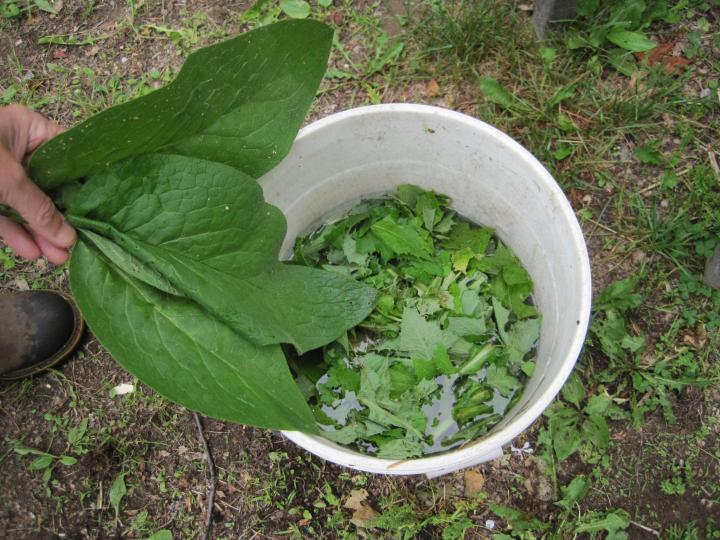
- Comfrey is rich in calcium, phosphorus, potassium, magnesium, vitamins A, B, & C, and trace minerals.
- Chicory is high in potassium, calcium, and vitamin A.
- Dandelions can be put to good use making a tea that is full of vitamins A & C, as well as with calcium and potassium.
Don’t have any of those plants? Plain old grass works well too. Fresh grass clippings are high in nitrogen and potassium. Gather up your clippings next time you mow the lawn, fill a bucket 2/3 full of them, add water and steep 3 days, stirring daily.
Fertilizer teas are fast-acting and free. Apply them every two weeks or when your plants need a boost. They are especially effective on newly transplanted ones and those in blossom or setting fruit. Brew up a batch of weeds and throw a garden tea party for your plants!
See another post on making organic plant fertilizers at home!
Have you ever tried making fertilizer tea? Tell us about your experience!




Probably but why go to all that trouble when a cold steep works just as well?
Chlorine will dissipate if left to sit for 24 hours but many towns use chloramine which does not dissipate quickly. To be on the safe side collect a bucket of rainwater next time there is a storm.
White clover would be an awesome addition to your fertilizer tea but do some research on the herbs you plan to use to make sure they wouldn't cause more harm than good to your growing plants.

Comments