Never miss a full moon, eclipse, or meteor shower with reminders from the Almanac Daily newsletter.
When Is the Next Full Moon? Full Moon Dates for 2026 Places in Delaware
Select a City in DE
- Arden, DE
- Ardencroft, DE
- Ardentown, DE
- Bear, DE
- Bellefonte, DE
- Bethany Beach, DE
- Bethel, Sussex County, DE
- Blades, DE
- Bowers Beach, DE
- Bridgeville, DE
- Brookside, DE
- Camden, DE
- Cheswold, DE
- Claymont, DE
- Clayton, DE
- Dagsboro, DE
- Delaware City, DE
- Delmar, DE
- Dewey Beach, DE
- Dover, DE
- Edgemoor, DE
- Ellendale, DE
- Elsmere, DE
- Farmington, DE
- Felton, DE
- Fenwick Island, DE
- Frankford, DE
- Frederica, DE
- Georgetown, DE
- Glasgow, DE
- Greenville, New Castle County, DE
- Greenwood, DE
- Harrington, DE
- Hartly, DE
- Henlopen Acres, DE
- Highland Acres, Kent County, DE
- Hockessin, DE
- Houston, Kent County, DE
- Kent Acres, DE
- Kenton, DE
- Laurel, DE
- Leipsic, DE
- Lewes, DE
- Little Creek, DE
- Long Neck, DE
- Magnolia, DE
- Middletown, DE
- Milford, DE
- Millsboro, DE
- Millville, DE
- Milton, DE
- New Castle, DE
- Newark, DE
- Newport, DE
- North Star, DE
- Ocean View, DE
- Odessa, DE
- Pike Creek, DE
- Rehoboth Beach, DE
- Riverview, Kent County, DE
- Rodney Village, DE
- Seaford, DE
- Selbyville, DE
- Slaughter Beach, DE
- Smyrna, DE
- South Bethany, DE
- Townsend, DE
- Viola, DE
- Wilmington, DE
- Wilmington Manor, DE
- Woodside, DE
- Wyoming, DE
The Full Harvest Moon, will occur on Saturday, September 26, 2026.
Find out exactly when the next Full Moon occurs—based on your location. Enter your ZIP code or postal code below to see the precise date and time for your area, plus a complete list of Full Moon dates for 2026.
Full Moons occur about every 29.5 days, but the exact timing varies by time zone. Use the tool below for the most accurate results.
Finding the Next Full Moon for Your Location
Enter your ZIP code (or Canadian postal code) to see:
- The next Full Moon date and time
- A full 2026 calendar
- A five-year Full Moon chart
Full Moon Dates for 2026
If you prefer U.S. Eastern Time or GMT, see the table below showing when the Moon reaches 100% illumination each month in 2026. For the most accurate results, we recommend using the location tool above.
| Date | Moon Name | U.S. Eastern Time | GMT Time |
|---|---|---|---|
| January 3 | Wolf Moon | 5:03 A.M. | 10:03 |
| February 1 | Snow Moon | 5:09 P.M. | 22:09 |
| March 3 | Worm Moon | 6:38 A.M. | 11:38 |
| April 1 | Pink Moon | 10:12 P.M. | 3:12 (April 2) |
| May 1 | Flower Moon | 1:23 P.M. | 18:23 |
| May 31 | Blue Moon | 4:45 A.M. | 9:45 |
| June 29 | Strawberry Moon | 7:56 P.M. | 00:56 (June 30) |
| July 29 | Buck Moon | 10:35 A.M. | 15:35 |
| August 28 | Sturgeon Moon | 12:18 A.M. | 05:18 |
| September 26 | Corn Moon (HARVEST MOON) | 12:49 P.M. | 17:49 |
| October 26 | Hunter's Moon | 12:11 A.M. | 5:11 |
| November 24 | Beaver Moon | 9:53 A.M. | 14:53 |
| December 23 | Cold Moon | 8:28 P.M. | 01:28 (Dec 24) |
How Many Full Moons in a Year?
Most years have 12 Full Moons—one for each month.
About every 2 to 3 years, however, there are 13 Full Moons in a single calendar year. When this happens, the second Full Moon in a calendar month is called a Blue Moon.
This occurs because the Moon’s cycle (about 29.5 days) doesn’t line up perfectly with our 365-day calendar.
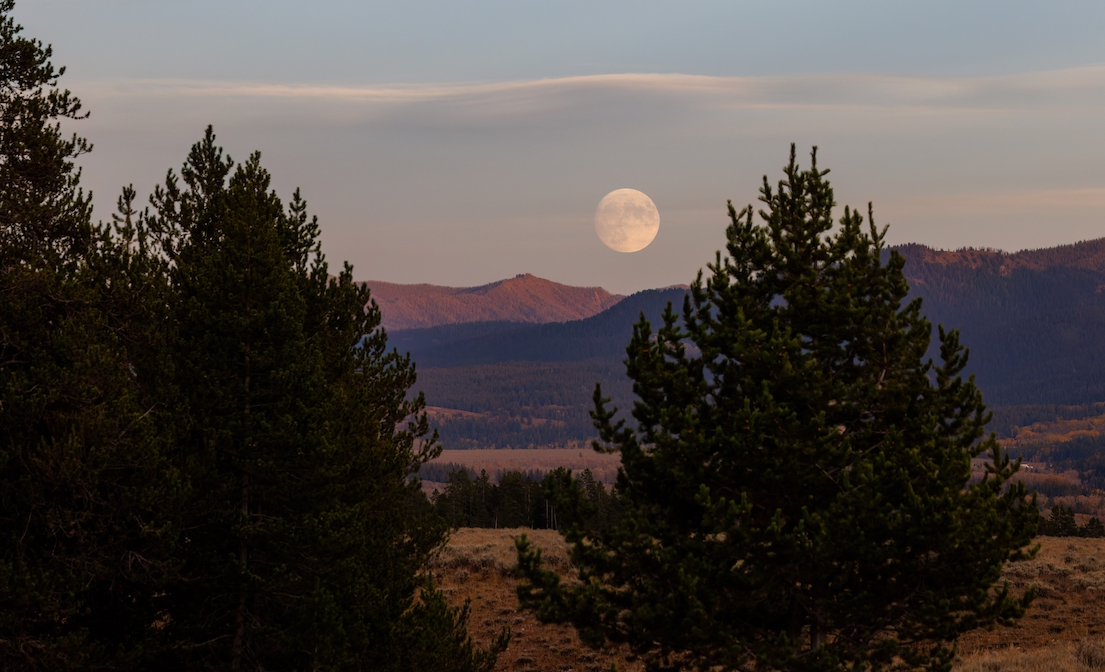
Full Moons of 2026
January 2026
The Full Wolf Moon occurs on Saturday, January 3, 2026, reaching peak illumination at 5:03 A.M. ET. To the naked eye, the Moon will appear full the night before and after its peak. Bonus: This is the first supermoon of the year. Learn more about the Full Wolf Moon.
February 2026
February’s Full Snow Moon peaks on Sunday, February 1, at 5:09 P.M. ET. Step outside after dusk to see it shining in all its winter glory. Find out why it’s called the Snow Moon in our February Moon Guide.
March 2026
The Full Worm Moon occurs on March 3 at 6:38 A.M. ET. This Full Moon also brings a total lunar eclipse, visible across much of the U.S. and Canada. Western and central regions will enjoy the best views, while eastern areas will see the eclipse’s final stages at dawn. Learn more about the March Total Eclipse of the Moon.
April 2026
April’s Full Pink Moon rises on Wednesday, April 1, at 10:12 P.M. ET—and no, it’s not an April Fools’ joke! This Paschal Moon marks the first Full Moon of spring, playing a role in determining the date of Easter. Discover the story behind the “Pink Moon” and its seasonal significance.
May 2026
May brings two Full Moons this year. The Flower Moon occurs on May 1 at 1:23 P.M. ET, followed by a Blue Moon on May 31 at 4:45 A.M. ET. Fittingly, the Flower Moon shines on May Day. The Blue Moon occurs near apogee, making it a micromoon.
June 2026
The Full Strawberry Moon occurs on June 29 at 7:56 P.M. ET, ushering in summer. Traditionally associated with the ripening of berries, it signals the start of strawberry season. Will the Moon appear pink? Read more about the June Full Moon.
July 2026
The Full Buck Moon occurs on Wednesday, July 29, 2026, at 10:35 A.M. ET. Because it peaks during daylight hours, look for it rising after sunset in the southeast. Learn more about the Full Buck Moon.
August 2026
The Full Sturgeon Moon occurs on August 28 at 12:18 A.M. ET. Full Moons rise around sunset and set near sunrise, as the Moon sits opposite the Sun in the sky. Use our moonrise and moonset tool to check exact times for your location.
September 2026
September brings the year’s Harvest Moon, occurring on Saturday, September 26, at 12:49 P.M. ET. As the Full Moon closest to the autumnal equinox, it rises shortly after sunset for several nights in a row—once helping farmers extend their workdays. September’s Full Moon is also traditionally called the Corn Moon.
October 2026
October’s Hunter's Moon occurs on October 26 at 12:11 A.M. ET. As the second Full Moon of autumn, it follows the Harvest Moon and has long been associated with preparing for winter. Look nearby for Saturn for a beautiful fall sky pairing.
November 2026
The Full Beaver Moon rises on November 24, marking the second supermoon of the year. A supermoon occurs when the Full Moon coincides with perigee—the Moon’s closest point to Earth—making it appear slightly larger and brighter in the sky.
December 2026
The Full Cold Moon arrives on December 23 at 6:14 P.M. ET, just in time for the holidays. This is the third and final supermoon of 2026 and will appear full the night before and after its peak. A bright, wintry Moon is a fitting way to end the year.
The Full Moon and Lunar Eclipses
Did you know that lunar eclipses occur during a Full Moon? This is when Earth passes between the Sun and the Moon. During a total lunar eclipse, the Moon can turn a coppery red as sunlight filters through Earth’s atmosphere—often called a Blood Moon. Read more about the "Blood Moon."
How to See a Full Moon at Its Best
A Full Moon rises around sunset and sets at sunrise, since it sits opposite the Sun.
You don’t need to observe it at the exact listed time. If clouds interfere one night, try again the night before or after— it will still appear full.
What is Happening During a Full Moon?
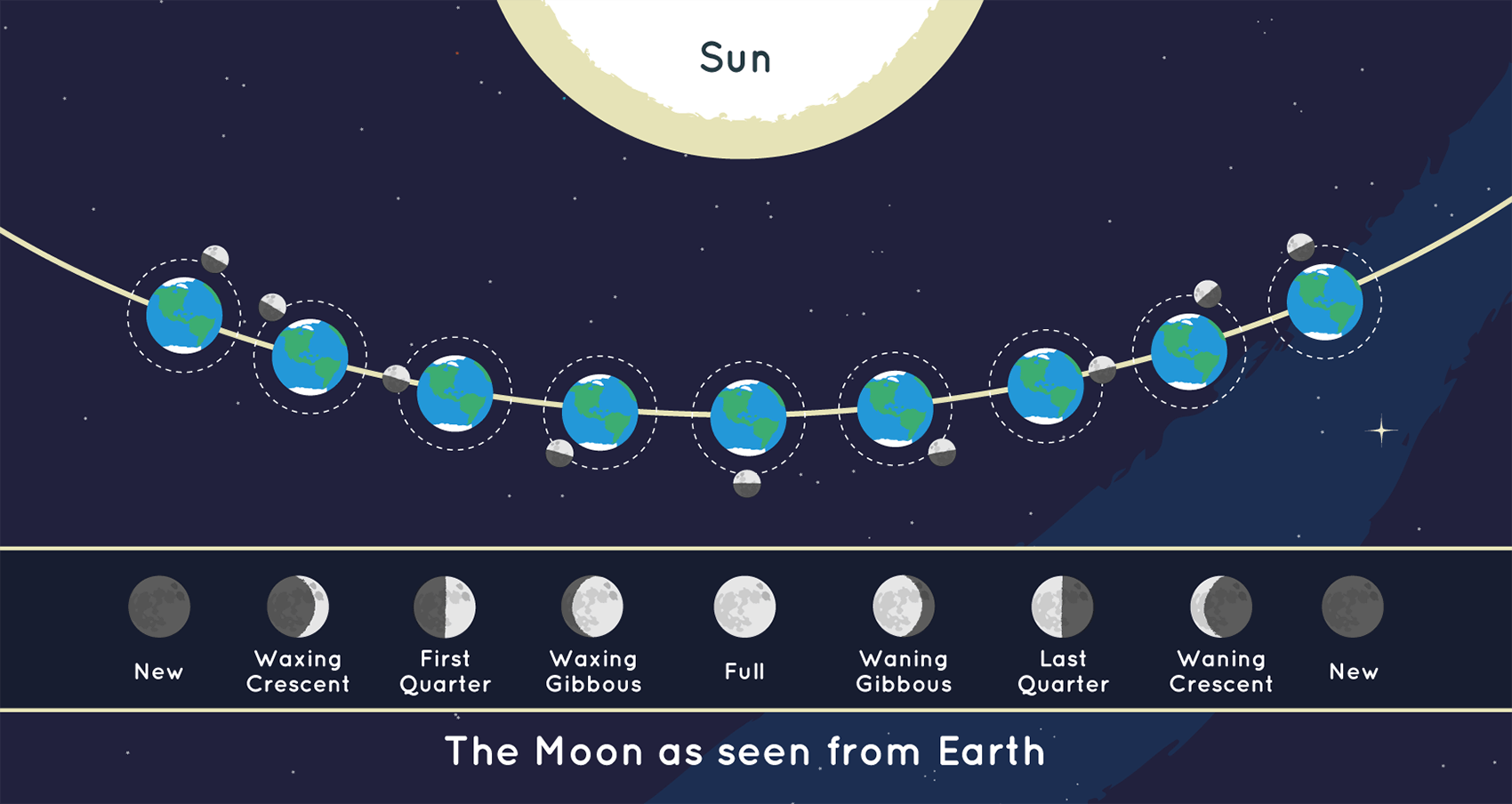
A Full Moon occurs when the Moon is opposite the Sun in the sky, and the side facing Earth is fully illuminated.
Although the exact moment of full illumination happens at a specific time, the Moon appears full to the eye the night before and after its peak. Read why it's called the Quarter Moon, not the Half Moon.
Different Kinds of Full Moons
Throughout the year, a Full Moon may appear larger, smaller, or reddish in color. These variations have clear astronomical explanations:
- Blood Moon: A Full Moon during a total lunar eclipse, often appearing red or orange. Read more about what a Blood Moon is (and isn't).
- Supermoon: A Full Moon near perigee, the point in the Moon’s orbit where it is closest to Earth. Technically, it appears slightly larger and brighter.
- Micromoon: The opposite of a supermoon. A full "micromoon" refers to the Moon at its farthest point from Earth, also known as "apogee."
- Blue Moon: The second Full Moon in a calendar month. Find out more about Blue Moons.
- Harvest Moon: The Full Moon closest to the autumnal equinox, when sunset and moonrise meet. Read more about the Harvest Moon.
The Full Moon's Role in Our Lives
For centuries, people have used the Full Moon to track seasons, guide planting, and mark religious and cultural events.
At The Old Farmer’s Almanac, explore Moon-based traditions such as:
